
-
- Digital Marketing
-
 Perf. Marketing
 E-mail Marketing
 PPC Services
 Video Marketing
 Influencer Marketing
- Social Media
 Facebook Marketing
 Instagram Marketing
 Twitter Marketing
 Pinterest Marketing
 TikTok Marketing


-
- Digital Marketing
-
Perf. Marketing
- E-mail Marketing
- PPC Services
- Video Marketing
- Influencer Marketing
- Social Media
- Facebook Marketing
- Instagram Marketing
- Twitter Marketing
- Pinterest Marketing
- TikTok Marketing
Blog
The Problem with the Status Quo: What Everyone Else Gets Wrong
Want a Quick Summary?
Summarize this article instantly with ChatGPT.
Every commercial industry eventually builds an ecosystem of comfortable mediocrity. In modern corporate services, few sectors suffer from this quiet decay quite like digital marketing and brand growth. Over the last two decades, as digital channels exploded from simple experimental avenues into the primary battlegrounds of business survival, the agency model failed to mature alongside them. Instead of developing rigorous engineering standards, transparent financial accountability, and deep domain expertise, most service providers settled into an easy, repeatable pattern designed primarily to safeguard recurring retainers while delivering marginal performance.
When businesses look at their monthly marketing spend, the frustration is palpable. Leadership teams sit in boardrooms reviewing elaborate slide decks filled with climbing graphs, green arrows, and celebratory summaries, yet their sales pipeline remains stagnant, their cost of acquiring a paying customer continues to climb, and their actual bottom-line revenue refuses to budge. This disconnect is not an accident. It is the direct consequence of systemic flaws baked into how standard service providers structure their offerings, measure success, and execute tactical campaigns. Understanding what everyone else gets wrong is the first step toward building a growth engine that generates lasting enterprise value.
The Broken Incentives of the Traditional Agency Model
The root cause of agency underperformance lies in misaligned commercial incentives. In a traditional service agreement, the vendor is incentivized to minimize operational labor while maximizing monthly billing. This creates an environment where true innovation and relentless optimization are actively discouraged because they require unpredictable hours, deep technical intervention, and continuous strategic recalibration.
Once the initial sales pitch concludes and the contract is finalized, the enterprise client is quietly transitioned from the experienced senior strategists who pitched the business to junior account managers who run mechanical, standardized playbooks. These playbooks are rarely tailored to the economic realities or competitive pressures of the client's industry. Instead, they consist of surface-level checklists designed to satisfy contractual minimums rather than capture decisive market share.
| Operational Area | The Traditional Status Quo Approach | The Underlying Structural Failure | Real Commercial Impact on Brands |
|---|---|---|---|
| Performance Reporting | Focuses on gross impressions, traffic volume, and social engagement. | Vanity data masks poor commercial intent and declining lead quality. | Capital is burned on uninterested audiences that never convert into paying customers. |
| Team Structure | Siloed departments for content, web development, paid ads, and search. | Lack of communication creates technical friction, crawl errors, and broken messaging. | Disjointed customer journeys, slow campaign rollout, and fragmented brand equity. |
| Campaign Strategy | Cookie-cutter monthly checklists applied uniformly across disparate industries. | Inability to adapt to rapid algorithmic updates, privacy shifts, or market shifts. | Loss of organic footprint and declining return on ad spend against nimble competitors. |
| Web Engineering | Heavy, bloated template setups reliant on excessive plugins and visual hacks. | Poor server performance, sluggish rendering, and broken mobile viewports. | High bounce rates, poor user conversion, and search crawler penalties. |
| Client Relationship | Passive maintenance retainers focused on maintaining the status quo. | Vendor views client as an administrative task rather than a growth partner. | Stagnant market share and gradual erosion of competitive advantage over time. |
The Vanity Metric Trap: Mistaking Activity for Achievement
The most pervasive error in modern growth consulting is the elevation of vanity metrics over commercial velocity. Traditional vendors love vanity metrics because they are easy to produce, simple to manipulate, and virtually guaranteed to look impressive on a PDF report. Millions of social video views, thousands of organic website visits, and high click-through rates look fantastic in an executive summary, but a business cannot deposit impressions into a corporate bank account.
When an agency celebrates an influx of generic search traffic or millions of fleeting video impressions without analyzing whether those visitors match the ideal customer profile, they are engaging in theatrical distraction. Real strategic success must be measured by economic variables: qualified sales inquiries, acquisition efficiency, deal size, customer lifetime value, and bottom-line margin contribution. When an agency disconnects tactical activity from commercial results, business owners are left paying for noise while starving their pipeline of actual buyers.
Standard reporting mechanisms often conceal several critical failure points:
- Traffic Quality Blind Spots: Driving massive traffic volume from non-commercial search queries or irrelevant geographical zones that have zero probability of buying your products or services.
- Click-Through Delusions: Measuring high click volumes from programmatic display networks or social feeds while ignoring that visitors bounce within three seconds of landing on the site.
- Unqualified Lead Generation: Handing sales teams lists of names and email addresses collected through irrelevant gated giveaways rather than genuine purchase-ready decision-makers.
- Blended Attribution Obfuscation: Combining branded organic search conversions with paid acquisition figures to falsely inflate the reported return on advertising spend.
The Silo Problem: Why Disconnected Teams Produce Mediocre Results
Another profound weakness of the industry status quo is organizational fragmentation. In a typical agency setup, the search engine optimization specialist does not understand backend server architecture; the copywriter produces prose without considering technical search hierarchy or user intent; the web designer builds layouts that disregard conversion psychology; and the media buyer runs paid campaigns that send expensive traffic to slow, unoptimized landing pages.
This operational compartmentalization guarantees that every project suffers from internal friction. When an organic visibility problem arises, the search specialist blames the developer for bad code, the developer blames the designer for heavy visual assets, and the copywriter blames the algorithm. The client is left playing referee between different teams within the very company they hired to manage the process.
A modern digital system cannot function as a collection of isolated islands. True growth requires complete technical, creative, and analytical integration. Every line of backend markup, every content paragraph, every paid media creative hook, and every conversion funnel step must be built in complete alignment toward a unified commercial objective.
Superficial Search Optimization: Checklists Versus Real Authority
Search engine optimization represents the single largest area of industry stagnation. For years, vendors have treated organic visibility as a paint-by-numbers administrative task: publish a handful of generic, keyword-stuffed articles, build low-tier directory backlinks, add basic meta tags, and invoice the client. This outdated methodology completely ignores how modern search algorithms, machine learning models, and semantic knowledge graphs evaluate relevance.
Modern discovery platforms have evolved far beyond simple keyword repetition. They evaluate deep user engagement signals, semantic context, entity relationships, technical rendering speed, and true topical authority. When an agency applies a legacy checklist to a modern digital landscape, the result is predictable: rankings stagnate, algorithmic updates cause sudden traffic collapses, and competitors who take an architectural approach capture all valuable commercial queries.
Overcoming these search deficiencies requires abandoning superficial tactics in favor of structural engineering:
- Topical Authority Mapping: Constructing expansive, deeply researched knowledge hubs that address every facet of a buyer's problem instead of publishing disconnected, thin blog posts.
- Technical Infrastructure Optimization: Resolving Document Object Model complexity, eliminating render-blocking scripts, maximizing crawl efficiency, and maintaining pristine Core Web Vitals across every viewport.
- Semantic Entity Definition: Implementing comprehensive structured schema markup that clearly explains to automated systems exactly who you are, what services you provide, and why your authority is verified.
- Intent-Based Funnel Architecture: Separating informational research content from high-stakes transactional landing pages to ensure visitors receive the exact UX layout required to take immediate action.
The Fragility of Cosmetic Web Development
The standard agency approach to web design and development is equally broken. Most web agencies treat website creation as a cosmetic styling exercise. They purchase commercial themes loaded with thousands of lines of unused JavaScript and redundant CSS frameworks, slap a visual page builder on top, and assemble pages without considering performance, security, or semantic hierarchy.
The resulting digital footprint looks reasonable on a designer's high-speed desktop monitor, but crumbles under real-world usage. Sluggish mobile load speeds cause impatient visitors to abandon the site before reading a single word. Unstable layouts cause visual elements to jump around the screen, frustrating user interactions. Missing semantic tags leave assistive technologies and search bots unable to decipher page structure. When web development is decoupled from performance engineering and conversion design, the final product becomes an expensive digital brochure rather than a revenue-generating commercial engine.
The Path Forward: Rejecting Stagnation for High-Velocity Execution
The market does not reward businesses that follow outdated playbooks. As automated platforms, artificial intelligence, and sophisticated algorithmic sorting reshape how consumers find and evaluate brands, the cost of adhering to the agency status quo will only continue to rise. Companies that rely on superficial metrics, disjointed teams, and cosmetic fixes will find themselves steadily squeezed out of their markets by competitors who embrace engineering precision and commercial accountability.
Fixing what everyone else gets wrong is not complicated, but it requires relentless discipline. It requires treating marketing capital with the same fiduciary responsibility as any major business investment. It demands tearing down internal silos, insisting on radical transparency in reporting, engineering fast and accessible digital platforms, and aligning every tactical initiative directly with enterprise growth. When you abandon the comfortable illusions of the status quo and commit to true execution, sustainable market leadership ceases to be a hope and becomes a repeatable reality.
Looking for Measurable Business Growth?
Partner with BrandStory for end-to-end digital & creative excellence.


Are You Looking for Growth?
Free instant digital marketing audit and improve performance.
Get Graded Today
Transform Your Digital Growth with BrandStory
From SEO, PPC, social media marketing, and content marketing to website development, branding, and lead generation, BrandStory delivers result-driven digital marketing services in Dubai and across the UAE, helping businesses attract, engage, and convert more customers.
Trusted by 1000+ leading brands in Dubai and globally including:




Related Blogs
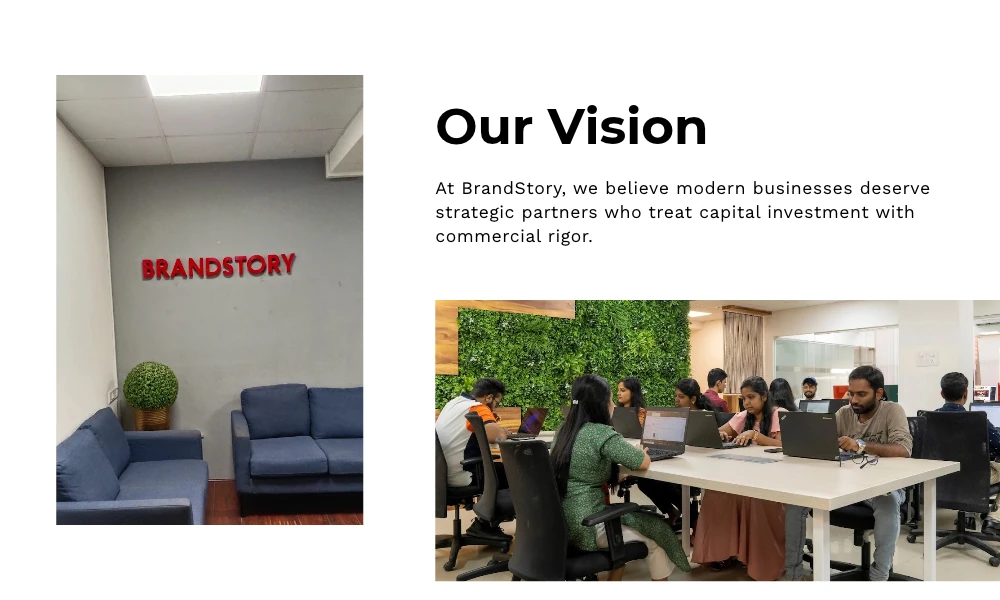
Our Long-Term Vision: Where We Are Going in the Next 5 Years
Planning the trajectory of a digital growth firm over a five-year horizon requires far more than setting ambitious finan...
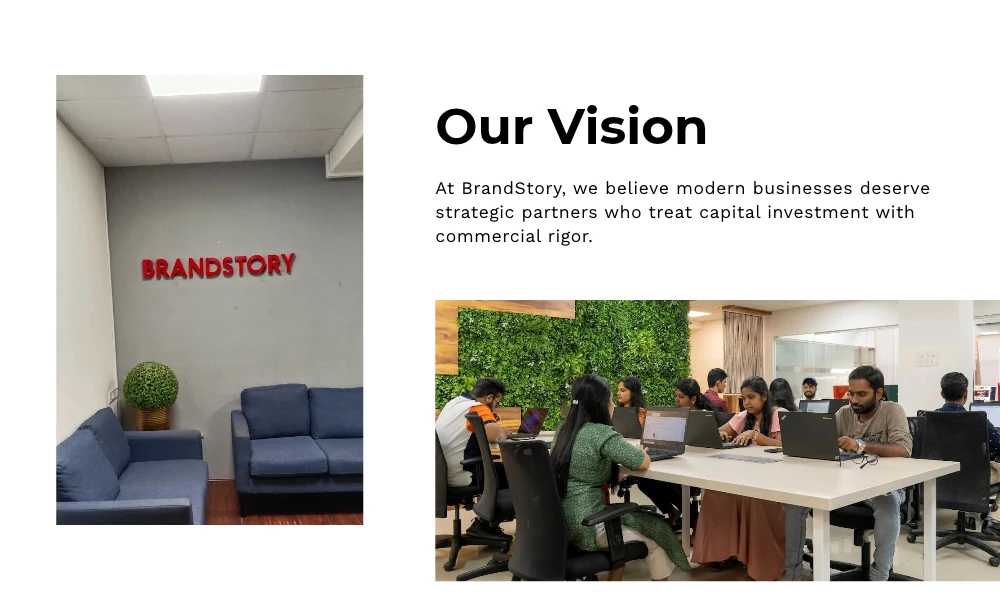
Core Values Defined: How We Make Decisions Every Day
Values are easy to write down when business is predictable and markets are calm. In every corporate handbook, one finds ...
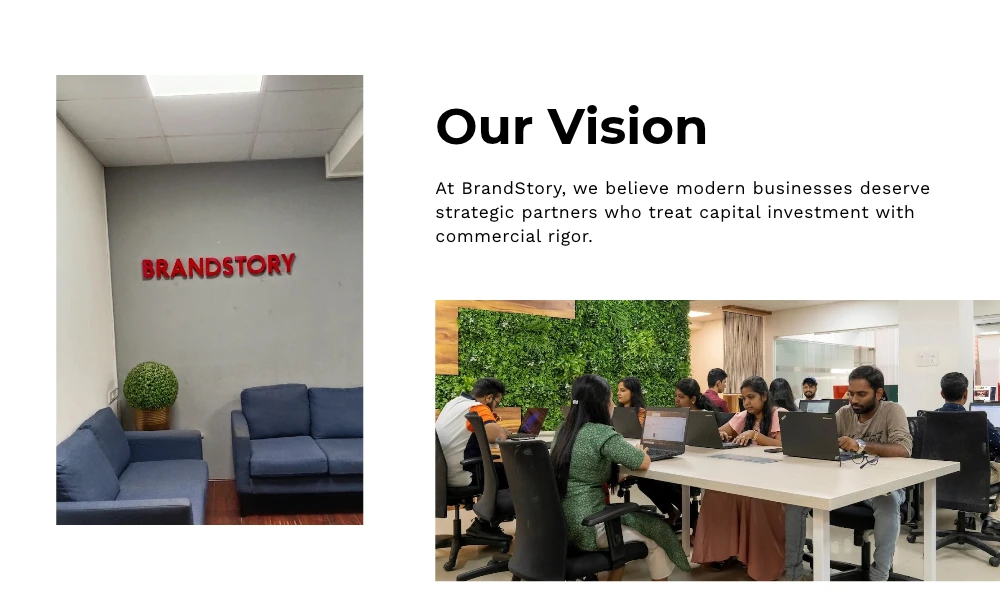
Behind the Curtain: Our Origin Story and What Drives Us
Every company begins with a spark, but enduring agencies are built out of frustration with the status quo. When we estab...

