


Blog
SEO Step by Step: A Complete Guide for Dubai & UAE Businesses

Want a Quick Summary?
Summarize this article instantly with ChatGPT.
Every business owner in Dubai who has tried to get their website to rank on Google has felt it- that frustrating gap between knowing SEO matters and actually knowing what to do about it. The internet is full of advice on search engine optimisation, but most of it is either too generic to be useful or too advanced to be actionable if you are starting from the beginning.
This guide is different. It is a practical, step-by-step SEO framework built specifically for businesses operating in Dubai and the UAE. Whether you are running a new startup in Business Bay, a healthcare clinic in Jumeirah, an e-commerce store targeting the GCC, or an established services firm in Abu Dhabi, the steps outlined here apply directly to your market, your competition, and the way UAE consumers use Google.
We have structured this as a genuine sequence. Each step builds on the one before it. Work through them in order and you will have a complete SEO foundation in place. Skip steps or rush through them and you will find yourself revisiting this guide six months from now wondering why your rankings have not moved.
Before You Begin: Understanding What is SEO
Search engine optimisation is the practice of improving your website so that it appears more prominently in Google's organic search results when people search for the products, services, or information you provide. Unlike paid advertising, which stops the moment your budget runs out, SEO builds a compounding asset. A page that earns a strong organic ranking continues generating traffic and leads month after month, often for years, without additional spend.
If you want a deeper grounding in how SEO fits into the broader picture of growing a business online, our guide on what SEO is in digital marketing covers the fundamentals in full, including how search engines work, why organic traffic outperforms most other channels, and what separates businesses that win with SEO from those that do not.
There are three pillars to SEO: technical SEO, which ensures your website can be crawled and indexed efficiently; on-page SEO, which ensures your content communicates relevance to both users and search engines; and off-page SEO, which builds your website's authority through signals from other reputable websites. This guide walks you through each of these pillars in the order that makes strategic sense, starting with the foundation and building upward.
One more thing before we start. SEO in Dubai operates in a specific competitive context. The UAE market is mobile-first, multilingual, and extraordinarily competitive across sectors like real estate, hospitality, finance, legal, healthcare, and professional services. Generic global SEO advice often overlooks these realities. Throughout this guide, we will flag where the UAE market context changes the approach you need to take.
Step 1: Conduct Keyword Research
Every effective SEO campaign begins with understanding exactly what your potential customers are typing into Google when they are looking for what you offer. This is keyword research, and it is the strategic foundation on which every other decision in this guide depends. Get keyword research right and the rest of your SEO efforts become significantly more efficient. Neglect it and you will spend months optimising for terms that either nobody searches for or that attract the wrong type of visitor.
Start With Your Business and Your Audience
Begin by listing every product, service, and topic your business is relevant to. Think about how your customers describe what they need, not how you describe what you provide. These two things are often different. A commercial law firm in Dubai might think in terms of "corporate restructuring" but their clients search for "business lawyer Dubai" or "company formation UAE." The language your customers use is the language that matters for SEO.
Once you have your initial list, use keyword research tools to expand it. Google Keyword Planner is free and provides search volume and competition data directly from Google. Ahrefs, SEMrush, and Ubersuggest offer deeper competitive analysis including the ability to see which keywords your competitors are ranking for. This competitor keyword gap analysis is one of the fastest ways to identify search terms you should be targeting but are not.
Prioritise Long-Tail Keywords First
Dubai businesses entering a competitive search landscape for the first time face a practical problem. The most obvious keywords in any category, such as "SEO agency Dubai" or "real estate Dubai," are dominated by established players with years of authority behind them. Trying to rank for these terms immediately is a slow and often unsuccessful strategy for newer websites.
A smarter approach is to prioritise long-tail keywords: longer, more specific search phrases with lower individual search volumes but also significantly lower competition. A search term like "how to choose a real estate agent in Dubai Marina" will receive fewer monthly searches than "real estate Dubai," but a buyer actively researching that specific question is far closer to making a decision. These high-intent, lower-competition terms are where newer or smaller websites can gain traction quickly and begin building the authority needed to compete for broader terms over time.
Map Keywords to Search Intent
Not all searches are created equal. Some people search to learn something. Some search to compare options. Some are ready to buy right now. Understanding the intent behind a keyword, and matching your content to that intent, is one of the most important and most commonly overlooked aspects of keyword research.
Google has become sophisticated at identifying what a searcher actually wants and serving them content that matches. If someone searches "what is VAT in UAE," they want an explanation, not a sales page. If they search "VAT consultancy Dubai," they are ready to speak with a service provider. Your keyword strategy needs to cover the full spectrum of intent, with different types of content targeting different stages of your customer's decision-making journey.
Step 2: Audit and Fix Your Technical SEO Foundation
Before you create a single piece of new content or pursue a single backlink, your website's technical foundation must be solid. Technical SEO ensures that Google can access, crawl, and index your website without encountering barriers. If your technical setup is broken, every other SEO effort you make is undermined at its foundation. Content that cannot be indexed cannot rank. Pages that load slowly drive visitors away before they have read a word.
A thorough technical SEO audit covers the following areas at minimum.
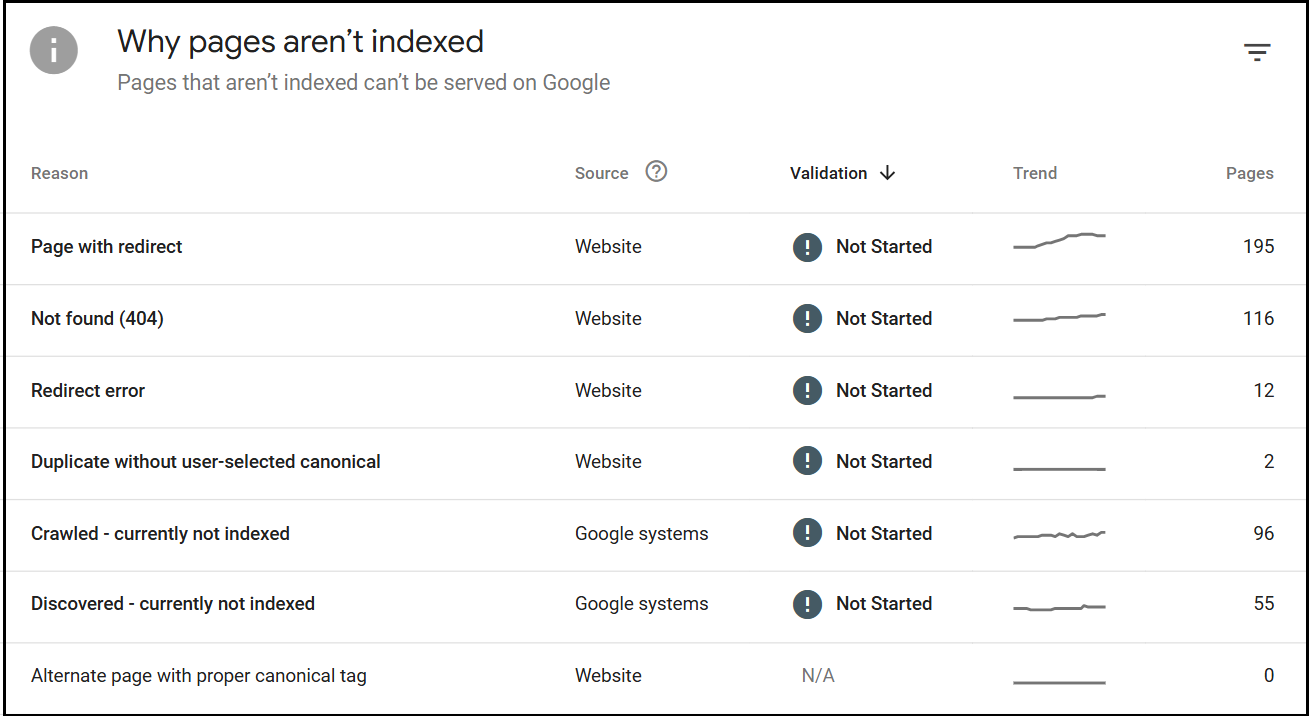
Crawlability and indexability should be verified first. Check your robots.txt file to confirm it is not accidentally blocking Googlebot from sections of your site it needs to access. Review your pages for noindex tags that may be excluding important content from Google's index. Submit an XML sitemap through Google Search Console so Google has a clear map of your most important pages.
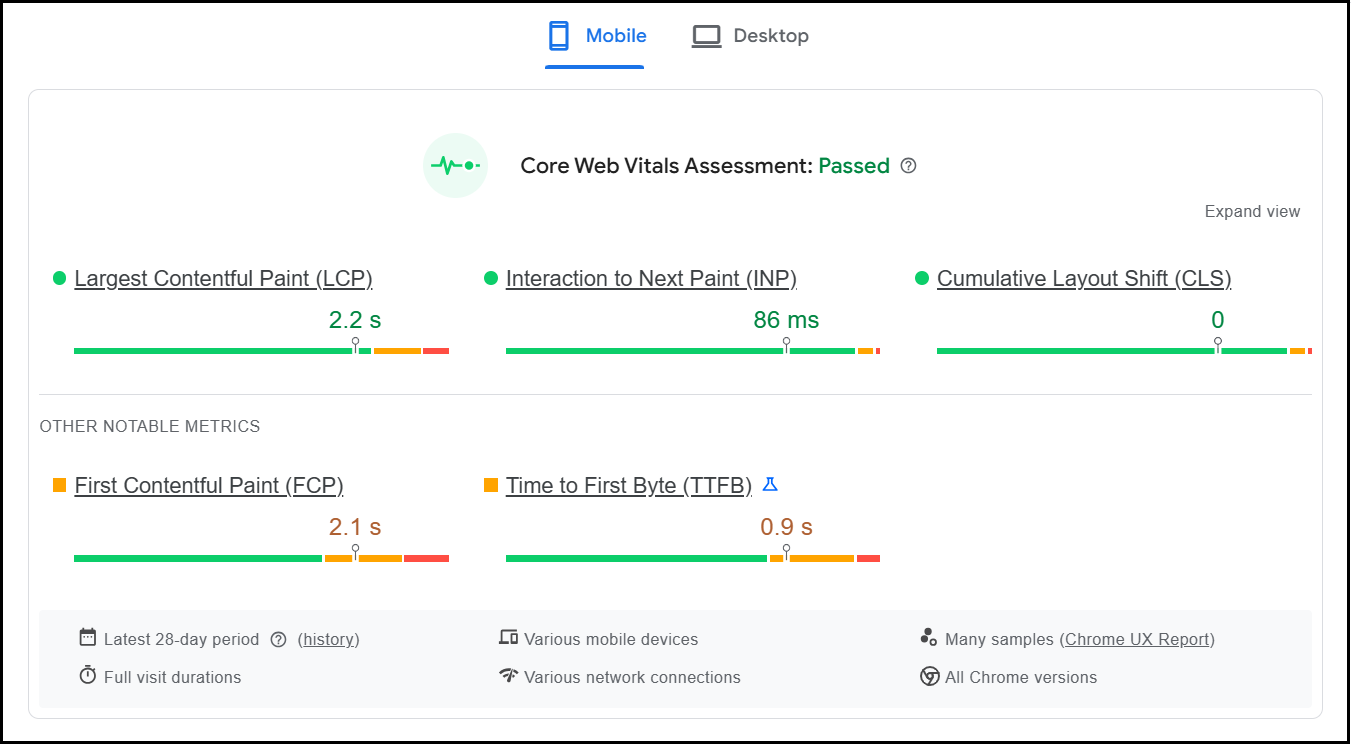
Page speed must be measured and addressed. Use Google PageSpeed Insights or Lighthouse to assess your Core Web Vitals scores, particularly Largest Contentful Paint (LCP), which measures how quickly the main content of a page loads. Google targets LCP under 2.5 seconds. Many business websites in Dubai significantly exceed this threshold due to large uncompressed images, excessive third-party scripts, and the absence of caching or a Content Delivery Network. Each of these has a specific technical fix.
Mobile performance is non-negotiable. Google uses mobile-first indexing, which means the mobile version of your website is the one Google evaluates for ranking purposes. In the UAE, where mobile internet usage is among the highest in the world, this is doubly important. Your website must use responsive design that adapts correctly to all screen sizes, with readable text, properly sized tap targets, and no content that is hidden or broken on mobile.
HTTPS security must be in place. Any website still operating on HTTP rather than HTTPS is sending a negative trust signal to Google and a visible security warning to every visitor using Chrome. SSL certificate installation and proper HTTP-to-HTTPS redirects are a basic requirement, not an optional upgrade.
For a comprehensive breakdown of everything technical SEO covers and how to address each area, our detailed guide on technical SEO for UAE businesses covers every element of a complete technical audit with actionable guidance on resolving the most common issues.
Step 3: Optimise Your On-Page SEO
On-page SEO is the process of optimising the content and HTML elements of each individual page on your website so that both users and search engines can understand exactly what the page is about and why it is relevant to a specific search query. Getting on-page SEO right is what allows Google to match your pages with the searches they should be appearing for.
Title Tags
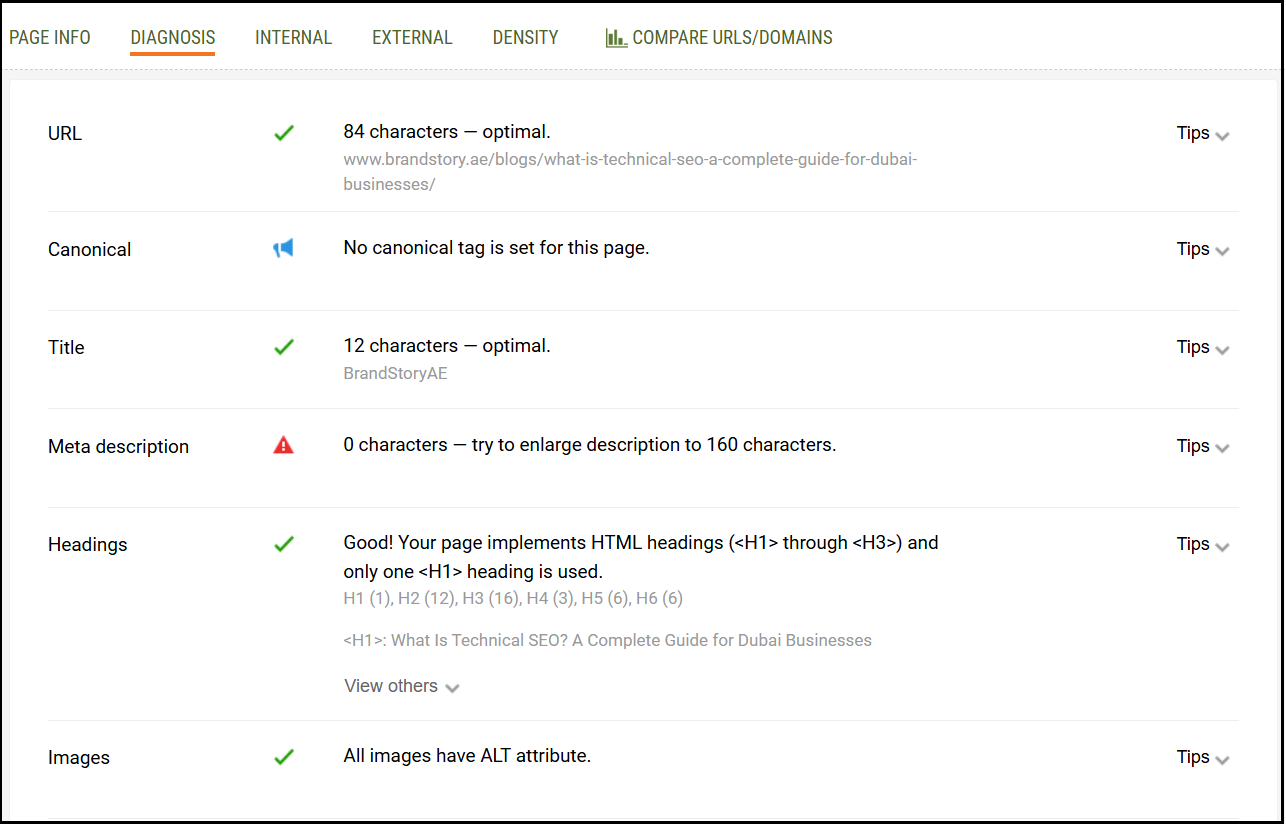
The title tag is the clickable headline that appears in Google's search results. It is one of the strongest on-page signals available for communicating relevance to both Google and the user. Your target keyword should appear near the beginning of the title tag. The title should accurately describe the content of the page and give users a clear reason to click. Keep title tags under 60 characters to prevent them from being truncated in search results.
A well-optimised title tag for a Dubai-based accounting firm targeting small businesses might read: "Accounting Services in Dubai for Small Business | YourFirm." It leads with the keyword, specifies the audience, and includes the brand. That is the structure to follow.
Meta Descriptions
The meta description is the brief paragraph that appears below the title in search results. While Google does not use it as a direct ranking signal, it has a significant influence on click-through rate. A compelling, specific meta description that tells the searcher exactly what they will find on your page and why your page answers their question better than the alternatives can meaningfully increase the proportion of searchers who click on your listing versus those who scroll past.
Write meta descriptions of between 150 and 160 characters. Include your primary keyword naturally. Focus on communicating value and relevance rather than trying to stuff in additional keywords.
Heading Structure
The heading tags on your page, from H1 through H6, create a logical hierarchy that helps both readers and search engines navigate your content. Every page should have exactly one H1 tag containing your primary keyword. Subheadings (H2 and H3) should break the content into clearly labelled sections and incorporate secondary keywords and related terms naturally. A well-structured page with clear headings is easier to read, easier to skim, and more likely to earn featured snippet placement in Google's search results.
Content Quality and Comprehensiveness
Google's ranking algorithms have become increasingly sophisticated at evaluating whether content genuinely serves the needs of the person who searched for it. Surface-level content that mentions a keyword repeatedly without providing genuine depth and utility ranks poorly and deserves to. The content on each page must comprehensively address the topic it targets, in greater depth and with more practical value than the pages currently occupying the top positions for that keyword.
For businesses in Dubai, this means content must also reflect the local market context. A blog post about office leasing in Dubai needs to address DIFC versus Business Bay versus Deira, free zone versus mainland considerations, and the specific documentation requirements for leasing as a foreign-owned business. Generic content that ignores this local specificity fails to serve the genuine needs of UAE searchers and signals to Google that it is not a truly authoritative resource.
Image Optimisation
Every image on your website should have a descriptive alt text attribute that accurately describes what the image shows, incorporating your target keyword where it is genuinely relevant and natural. Images should be compressed to the smallest file size that does not visibly reduce quality, and they should be served in modern formats like WebP where possible. Unoptimised images are one of the most common causes of slow page load times and poor Core Web Vitals scores.
Internal Links
Every page you publish should link to other relevant pages on your website using descriptive anchor text. Internal links distribute authority across your website, help Google understand the topical relationships between your pages, and keep visitors moving through your content toward conversion. A blog post about SEO for Dubai e-commerce should naturally link to your e-commerce SEO service page and to related blog content. These connections are both user-friendly and algorithmically beneficial.
Step 4: Create High-Quality, Intent-Matching Content
Content creation is where many businesses begin their SEO journey, but without the keyword research, technical foundation, and on-page framework that precede it, content production alone rarely delivers meaningful results. With those foundations in place, a consistent, well-planned content programme becomes one of the most powerful organic growth engines available.
Build a Content Strategy Around Your Keywords
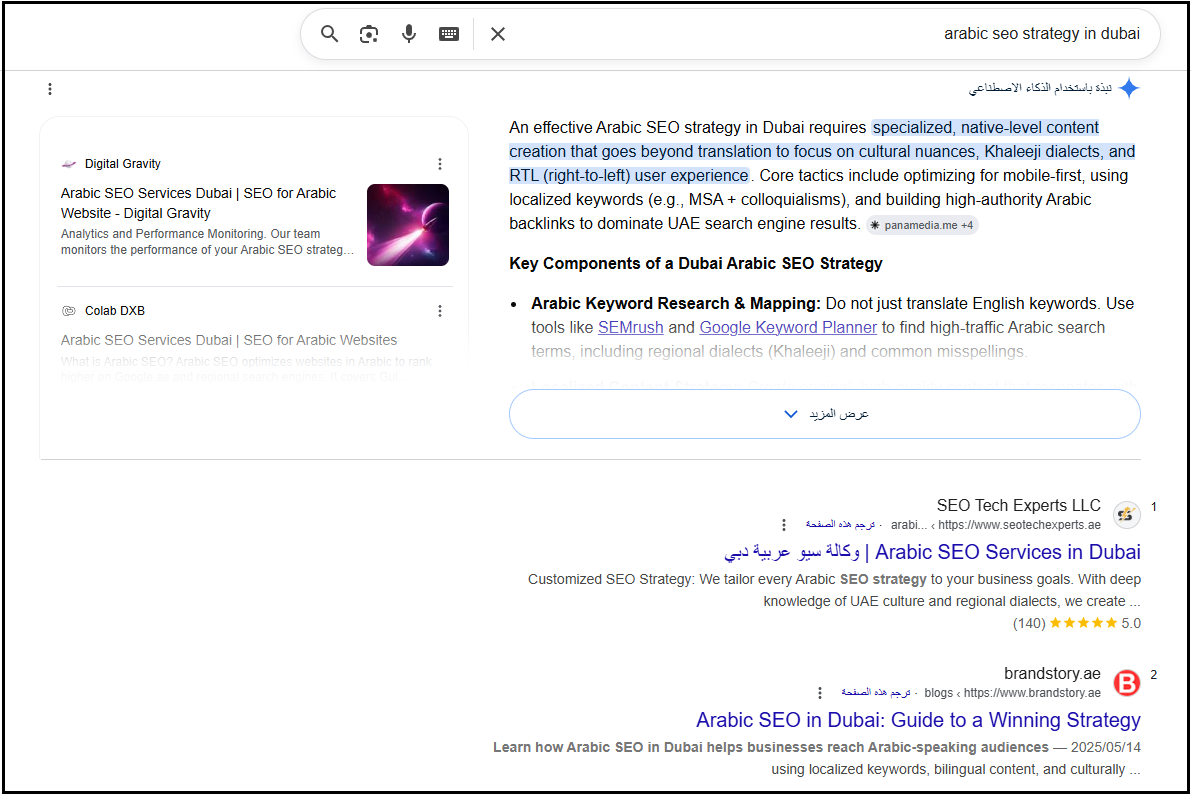
Your keyword research from Step 1 should directly inform your content plan. Every piece of content you create should target a specific keyword or cluster of related keywords that represent a real search your potential customers are making. Content created without this keyword-to-intent mapping is essentially hoping to rank for something relevant by accident.
Organise your content strategy around the concept of topic clusters. A topic cluster consists of a comprehensive pillar page that covers a broad topic in depth, supported by a set of more focused cluster articles that each address a specific subtopic within it. All the cluster articles link back to the pillar page and to each other. This architecture signals to Google that your website has genuine breadth and depth of expertise on a topic, which builds the kind of topical authority that drives sustained ranking improvements across your entire content ecosystem.
Match Content Format to Search Intent
Different search queries call for different types of content. An informational query like "how does VAT work in the UAE" calls for a detailed explanatory article. A commercial query like "best accounting software UAE" calls for a comparison guide or review. A transactional query like "hire accountant Dubai" calls for a service page with strong calls to action, social proof, and clear contact information. Publishing the wrong content format for the intent behind a keyword is one of the primary reasons pages fail to rank even when they are well-written and technically optimised.
Depth, Originality, and Genuine Usefulness
Google's Helpful Content system is specifically designed to identify and reward content that was created primarily to serve users rather than primarily to rank in search results. The distinction is real and measurable. Content that offers original insights, genuine expertise, practical advice that readers can actually apply, and a level of depth that goes beyond surface-level coverage consistently outperforms content that was produced quickly, at volume, or by repurposing the same information that is already available on the page currently ranking.
In the UAE market, originality often means grounding content in the specific regulatory, cultural, and competitive context of doing business in Dubai or Abu Dhabi. This kind of localised, expert-level content is rare and is precisely what creates a meaningful differentiation from competitors producing generic SEO content. Leading SEO companies in Dubai prioritize localized and market-specific content strategies.
Step 5: Optimise for Local SEO
If your business serves customers in a specific geographic area, whether that is Dubai, Abu Dhabi, Sharjah, or the broader UAE, local SEO deserves a dedicated step in your strategy. Local SEO is the practice of optimising your online presence to appear prominently in location-based searches and in Google's Local Pack, the map listing that appears at the top of local search results.

The foundation of local SEO is your Google Business Profile (formerly Google My Business). This free profile controls how your business appears in Google Search and Google Maps. It must be claimed, fully completed, and actively maintained. Every section matters: your business category, service areas, opening hours, photos, products or services, and the questions and answers section. Your business name, address, and phone number must be consistent across your website, your Google Business Profile, and every directory or citation where your business is listed online.
Our detailed guide to Google Business Profile SEO walks through every element of profile optimisation, from selecting the right primary category to building a review generation strategy that improves both your local ranking and your conversion rate.
Customer reviews are a direct local ranking signal. Businesses with a higher volume of genuine, recent, positively-rated reviews consistently outperform those with fewer or older reviews in local pack results. Building a systematic process for requesting reviews from satisfied customers after each transaction or engagement is one of the highest-return activities in local SEO.
Local content creation also drives local SEO performance. Blog posts and landing pages that specifically address local search queries, incorporate location-specific context, and answer the questions UAE searchers are actually asking signal local relevance to Google in a way that generic national or global content cannot. The five essential SEO strategies every Dubai entrepreneur must apply includes a detailed section on how to build local relevance into your broader content strategy.
Step 6: Build Authoritative Backlinks
Backlinks, which are links from other websites pointing to yours, are one of the most powerful ranking signals in Google's algorithm. Each quality backlink acts as a vote of confidence from another website, signalling to Google that your content is trustworthy, valuable, and worth sending searchers to. But the emphasis on quality cannot be overstated. Ten backlinks from genuinely authoritative, relevant websites in your industry will outperform five hundred links from low-quality directories, link farms, or unrelated websites.
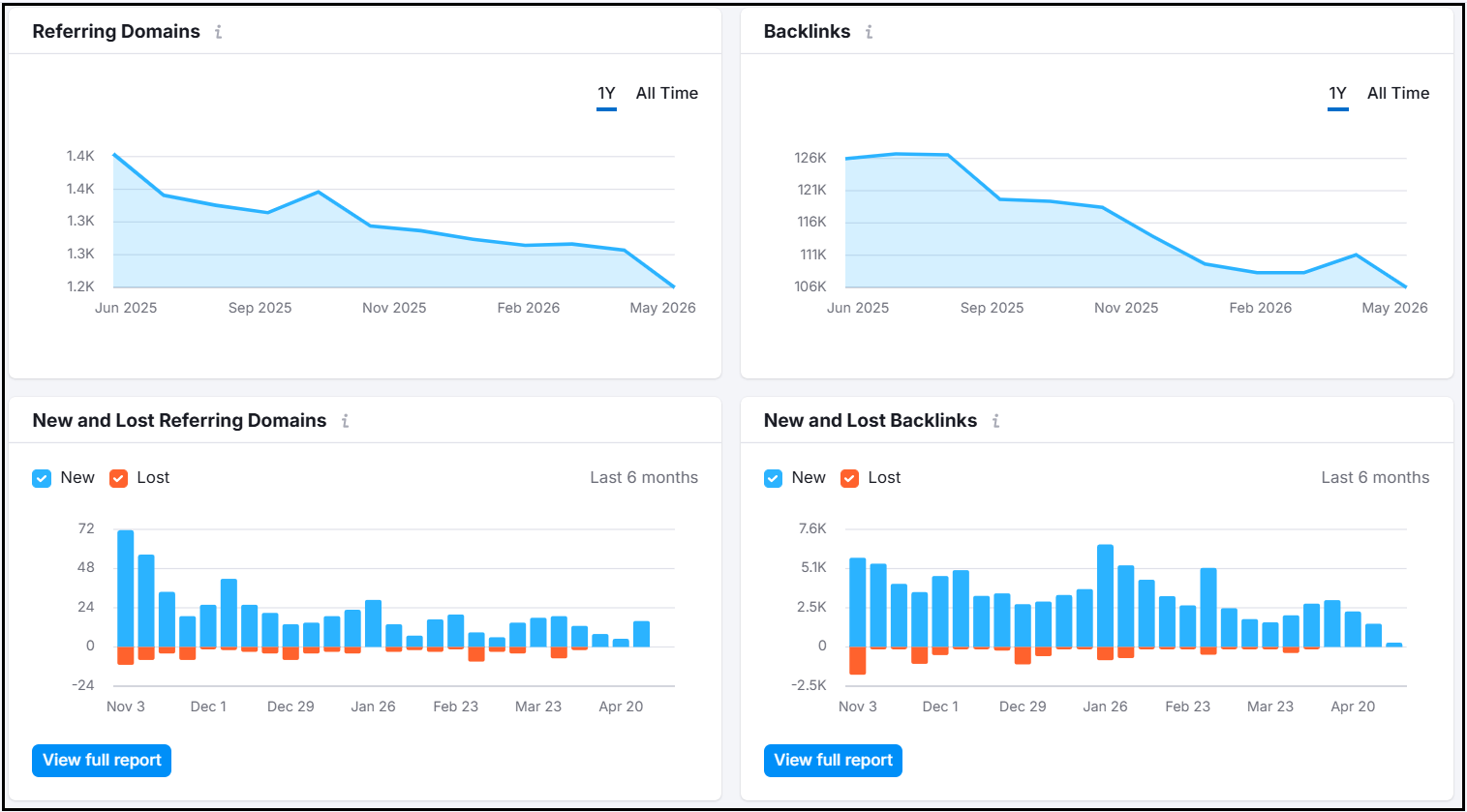
Building quality backlinks requires a strategic, patient, and ethical approach. The most sustainable link-building strategies are those that earn links naturally because your content is genuinely valuable enough that other websites want to reference it, combined with proactive outreach to relevant publications and partners.
Creating linkable content assets is the foundation. Long-form research pieces, original data studies, definitive industry guides, and practical tools that other websites naturally cite and reference are the types of content that attract editorial links without requiring individual outreach for every placement. In the UAE context, this might mean producing an annual report on digital marketing trends in the GCC, a comprehensive guide to UAE e-commerce regulations, or a salary survey for the Dubai technology sector.
Guest publishing on authoritative industry websites and UAE-relevant media outlets allows you to reach new audiences while earning contextual backlinks to your website. Digital PR, which involves creating newsworthy content or campaigns that earn coverage from respected media publications, is one of the most effective and scalable link-building approaches for businesses that want to build authority quickly in competitive markets.
For a comprehensive breakdown of every major link-building strategy, the specific tactics that work in the UAE market, and how to monitor the quality and impact of the links you earn, our complete guide to link building for SEO success covers the full topic in practical depth.
What you should absolutely avoid is purchasing links, participating in private blog networks, or using any tactic designed to manipulate Google's link evaluation rather than genuinely earn editorial endorsement. Google's algorithms and manual review teams have become highly effective at identifying and penalising these practices. The short-term ranking gains they occasionally produce are almost always followed by significant, difficult-to-recover-from penalties.
Step 7: Measure, Analyse, and Refine
SEO without measurement is guesswork. Every action you take in your SEO campaign, from the keywords you target to the pages you optimise to the links you build, should be tracked against measurable outcomes. Data tells you what is working, what is not, and where your time and budget will produce the highest return.
Google Search Console
Google Search Console is your primary window into how Google sees and evaluates your website. It shows you which queries your pages are appearing for, how many clicks and impressions each page receives, your average position in results, and any technical issues Google has encountered when crawling your site. Review your Search Console data at minimum once a week. Pay particular attention to pages that are receiving a high number of impressions but generating very few clicks. This often indicates that your title tag or meta description is not compelling enough relative to the competing results on that page, and optimising these elements can produce rapid click-through rate improvements without requiring any additional content work.
Google Analytics
Google Analytics 4 tracks how visitors from organic search behave once they reach your website. Which pages do they visit? How long do they stay? Which content leads them to enquire, purchase, or convert? Understanding user behaviour on your website after they arrive from SEO is essential for identifying which pages are converting organic traffic into leads or customers and which pages have a retention problem that needs to be addressed before more traffic is sent to them.
Rank Tracking
Tools like Ahrefs, SEMrush, and Moz allow you to track your keyword rankings over time. Set up rank tracking for every target keyword in your strategy and monitor weekly movements. Rankings are a leading indicator: they move before traffic volumes change significantly. Tracking them weekly allows you to identify emerging opportunities where you are close to the top positions and to diagnose ranking drops quickly before they affect your traffic materially.
Regular Content Audits
SEO is not a publish-and-forget discipline. Content that ranked well twelve months ago may have been overtaken by fresher, more comprehensive content from a competitor. Google's quality evaluators continually reassess pages as the competitive landscape evolves. A regular content audit, conducted every six to twelve months, identifies which existing pages have declined in rankings and traffic and would benefit from an update, expansion, or structural refresh. Re-optimising underperforming existing content is often faster and more effective than creating an entirely new piece targeting the same topic.
Step 8: Maintain Consistency and Plan for the Long Term
The single most common reason businesses in Dubai fail to see the SEO results they expected is not that they did the wrong things. It is that they stopped doing the right things before those things had time to produce results. SEO operates on a timeline that often frustrates businesses accustomed to the immediate feedback loops of paid advertising. Understanding this timeline and planning for it is as important as any technical or content decision you make.
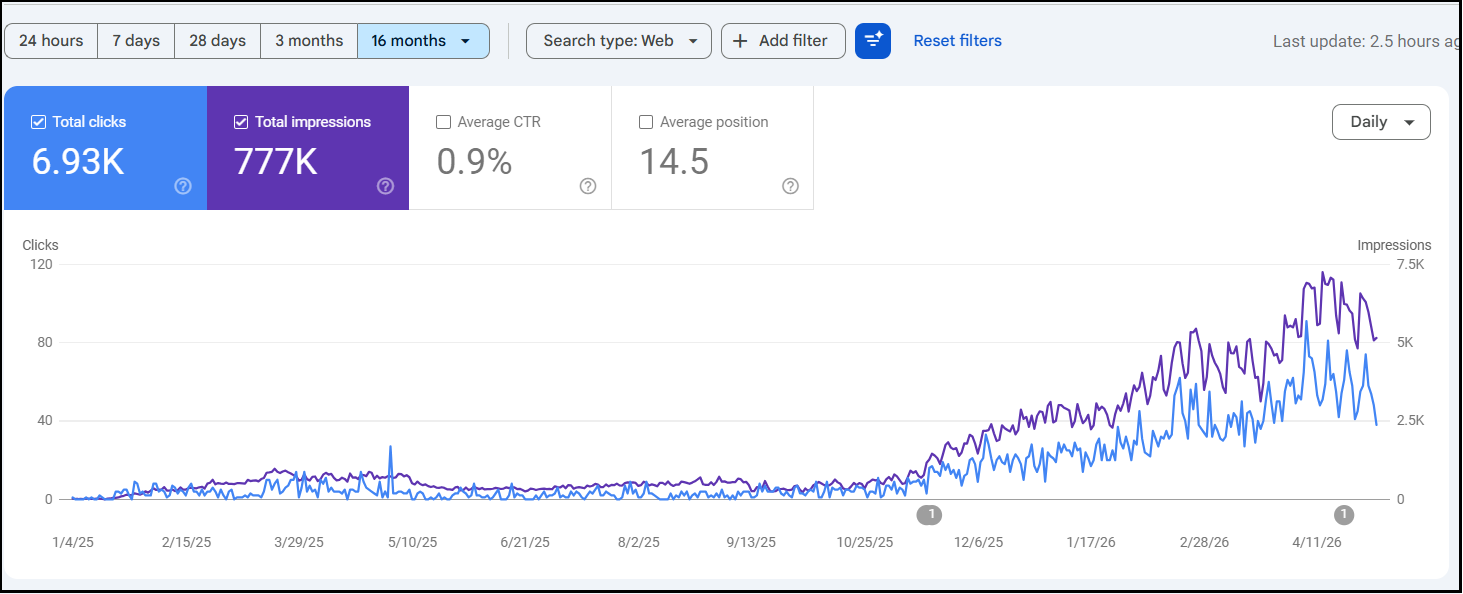
In the first three months of an SEO campaign, the visible results in terms of rankings and traffic are typically modest. This is the foundation-building phase. Technical fixes are being implemented, content is being created, initial links are being built, and Google is gradually reassessing your website in light of these changes. The work being done during this period is real and important, even when the rankings dashboard does not yet show dramatic movement.
From months four through six, early ranking improvements typically become visible for lower-competition target keywords. Traffic begins to grow from terms that were not appearing in the top pages previously. Conversion tracking starts to produce meaningful data about which pages are generating enquiries and sales from organic traffic.
From months seven through twelve, the compounding nature of SEO investment becomes more apparent. Content published in the early months has matured and accumulated authority. Backlinks earned from outreach are having measurable effects on domain authority. Rankings for more competitive terms begin to improve. Month-on-month organic traffic growth becomes consistent.
Businesses that maintain consistent SEO activity across this entire period, and continue it beyond it, build organic traffic assets that outperform paid channels on a cost-per-lead basis over time and that cannot be immediately replicated by a competitor simply increasing their advertising budget.
When to Work With an SEO Agency in Dubai
Many businesses attempt to manage SEO in-house, particularly at the early stages. For businesses with the time, technical aptitude, and content production capacity to execute the steps in this guide consistently, in-house SEO management is achievable. But the most common outcome is that SEO becomes one of many competing priorities, receives inconsistent attention, and produces inconsistent results.
Partnering with a specialist SEO agency in Dubai provides several advantages that are difficult to replicate in-house. Deep technical expertise across all dimensions of on-page, technical, and off-page SEO. Established processes for keyword research, content planning, link building, and performance reporting that have been refined across hundreds of campaigns. Access to enterprise-level tools that provide data quality significantly beyond free alternatives. And critically, dedicated capacity. SEO requires consistent, sustained effort. An agency's team does not deprioritise SEO when other business demands appear, because SEO is their entire business.
BrandStory has been delivering measurable organic growth for businesses across Dubai and the UAE for over fourteen years. Our approach begins with a thorough audit of your current technical health, keyword positioning, content landscape, and backlink profile. From there, we build a strategy tailored to your market, your competition, and your commercial objectives, not a generic playbook applied to every client regardless of context.
Whether you are looking to build a comprehensive long-term SEO programme or want to understand where your current strategy has gaps, our team can help. Get in touch with BrandStory today for a free SEO audit and discover exactly where your website's organic potential is currently being left on the table.
Frequently Asked Questions
How long does it take to see SEO results in Dubai?
Most businesses in Dubai begin to see meaningful ranking improvements between three and six months after beginning a consistent SEO programme. Highly competitive keywords in sectors like real estate, legal services, or financial services may take nine to twelve months or longer. Less competitive niches or long-tail keyword strategies can produce visible results within the first eight to twelve weeks. The timeline depends significantly on your starting position, the competitiveness of your target keywords, the quality and frequency of your content production, and the authority-building work being done alongside it.
Can I do SEO myself or do I need an agency?
The steps in this guide are all executable without agency support. Many small businesses in the UAE manage their own SEO effectively, particularly in less competitive niches. The challenge is consistency and technical depth. On-page optimisation and content creation are accessible. Technical SEO audits, structured data implementation, and sustained link building outreach require more specialised skills and tools. The honest answer is that businesses that partner with experienced SEO specialists consistently achieve better results faster than those managing SEO entirely in-house, particularly in competitive Dubai markets.
What is the most important step in SEO?
All of the steps in this guide are interdependent. Keyword research without content production produces no rankings. Content without technical SEO may never be indexed. Links without quality content drive traffic to pages that do not convert. However, if forced to identify the single most impactful starting point, keyword research is foundational. Every other decision in an SEO strategy flows from a clear understanding of what your audience is searching for and how to match your content and pages to those searches.
Is SEO still worth investing in for Dubai businesses in 2026?
Emphatically yes. Google remains the dominant starting point for high-intent commercial research in the UAE across every sector. The introduction of AI Overviews and evolving SERP features changes some aspects of how visibility translates to clicks, but it does not change the fundamental value of appearing prominently when potential customers are searching for what you offer. If anything, the increasing sophistication of Google's ranking systems raises the bar for content quality and technical excellence in ways that reward businesses investing in genuine SEO over those relying on shortcuts.
How much should a Dubai business budget for SEO?
SEO investment varies considerably based on the competitiveness of your target market, the current state of your website, and the scale of the programme you want to run. At a minimum, a meaningful SEO programme for a small Dubai business typically requires a budget sufficient to cover professional keyword research, content production, technical implementation, and some level of link building outreach. Attempting to run SEO on a budget that does not cover these activities adequately produces slow, inconsistent results and often leads to the false conclusion that SEO does not work, when the reality is that underfunded SEO rarely works at the pace or scale a competitive Dubai market demands.
Looking for Measurable Business Growth?
Partner with BrandStory for end-to-end digital & creative excellence.


Are You Looking for Growth?
Free instant digital marketing audit and improve performance.
Get Graded Today
Transform Your Digital Growth with BrandStory
From SEO, PPC, social media marketing, and content marketing to website development, branding, and lead generation, BrandStory delivers result-driven digital marketing services in Dubai and across the UAE, helping businesses attract, engage, and convert more customers.
Trusted by 1000+ leading brands in Dubai and globally including:




Related Blogs
.webp)
Search Engine Optimization Step-by-Step: A Beginner's Guide
Search engine optimization can feel overwhelming when approached as one giant, undefined task. The most effective way to...
.webp)
SEO Tools in Digital Marketing: A Complete Guide
SEO involves far too many moving parts for any marketer to track manually, from keyword research and technical site heal...
What Is the Primary Goal of SEO: A Detailed Guide
Ask five different people what SEO is for, and you will likely get five different answers: ranking higher, getting more ...

Search Engine Optimization vs Pay-Per-Click: Comparison Guide
Search engine optimization and pay-per-click advertising both aim to get your business in front of people actively searc...
.webp)
SEO or Paid Ads: How to Decide What Your Business Needs
Most businesses do not actually need a lecture on what SEO and paid ads are. What they need is a clear answer to a much ...
.webp)
SEO vs PPC: Which Is Right for Your Business?
Almost every business trying to grow through search eventually faces the same question: should we invest in SEO, pay for...

