
-
- Digital Marketing
-
 Perf. Marketing
 E-mail Marketing
 PPC Services
 Video Marketing
 Influencer Marketing
- Social Media
 Facebook Marketing
 Instagram Marketing
 Twitter Marketing
 Pinterest Marketing
 TikTok Marketing


-
- Digital Marketing
-
Perf. Marketing
- E-mail Marketing
- PPC Services
- Video Marketing
- Influencer Marketing
- Social Media
- Facebook Marketing
- Instagram Marketing
- Twitter Marketing
- Pinterest Marketing
- TikTok Marketing
Blog
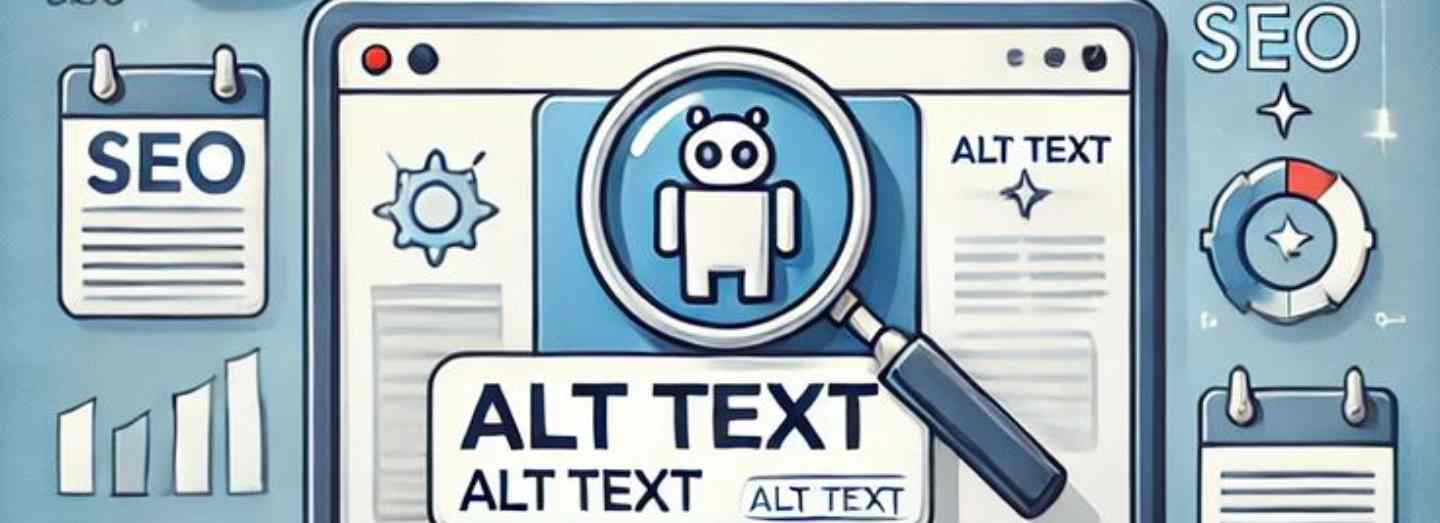
Alt Text SEO: Why Image Alternative Text Is Essential
Want a Quick Summary?
Summarize this article instantly with ChatGPT.
Of all the on page SEO elements that website owners and marketers overlook, alt text is among the most consistently neglected. Many websites have dozens, hundreds, or even thousands of images with no alt text at all or worse, alt text that has been filled with keyword-stuffed gibberish that serves neither users nor search engines. This is a significant missed opportunity. Alt text, when used correctly, serves as a powerful SEO signal that helps search engines understand your images, contributes to accessibility for visually impaired users, and can drive meaningful traffic from Google Image Search. Understanding how to write and implement alt text effectively is a fundamental on page SEO skill that every website owner should master.
Alt text (short for alternative text, sometimes also called alt attributes or alt tags) is an HTML attribute that provides a text description of an image. Originally designed as an accessibility feature to convey image content to users who cannot see images including people using screen readers and cases where images fail to load alt text has also become an important signal that search engines use to understand what images contain and how they relate to the surrounding content.
Why Alt Text Matters for SEO
Search engine crawlers are sophisticated text-processing machines, but they cannot literally see images the way humans do. They rely on surrounding text, file names, and most importantly alt text to understand what an image contains and how it relates to the page's overall topic. Well-written alt text provides a clear, accurate description that helps Google classify and index images appropriately which in turn contributes to the page's topical relevance signals and increases the likelihood of images appearing in Google Image Search results.
Google Image Search is a substantial source of organic traffic that many businesses completely ignore. Users searching specifically for images product photos, infographics, illustrations, diagrams frequently discover and visit websites through image search results. Pages with properly optimised alt text have a significantly higher chance of appearing in these results than pages with missing or poorly written alt text. For businesses in visual-heavy industries retail, hospitality, real estate, food and beverage image search traffic can be a meaningful contributor to overall organic performance. Systematic alt text optimisation is a standard component of the on page SEO services delivered by any reputable SEO agency in Dubai.
Alt Text and Web Accessibility
Beyond its SEO value, alt text plays a critical role in making websites accessible to people with visual impairments. Screen readers software applications that convert page content to audio for blind and low-vision users read out alt text when they encounter images. Without alt text, screen reader users receive no information about images and may miss important content or context that those images convey.
Web accessibility is increasingly a legal requirement in many jurisdictions, and the UAE is no exception with its commitment to inclusive digital services. Beyond compliance, accessible websites serve a broader audience and signal to Google that your site provides a good user experience a factor that contributes positively to overall SEO performance. Writing alt text with genuine accessibility in mind asking yourself what a blind user would need to know about this image almost always produces better alt text from an SEO perspective too, since the two goals are closely aligned.
The Anatomy of Effective Alt Text
Writing effective alt text is a skill that, once learned, can be applied consistently across an entire website. Good alt text balances three qualities: accuracy (it correctly describes what is in the image), relevance (it is relevant to the page's topic and context), and conciseness (it conveys the key information without being unnecessarily long or verbose).
Alt text should describe the image as specifically and accurately as possible. What is in the image? Who or what is pictured? What is happening? What is the image's function on the page? These questions should guide your descriptions. For a photograph of a team meeting in a Dubai office, appropriate alt text might be: "digital marketing team discussing SEO strategy in a Dubai office." For a product image of a running shoe, appropriate alt text might be: "Nike Air Max men's running shoes in blue and white."
Where it is genuinely relevant to the image content, incorporate target keywords naturally. If a page is optimised for "SEO services Dubai" and features an image of your SEO team at work, including "SEO services Dubai" in the alt text reinforces the keyword signal while also accurately describing the image. However, alt text that includes keywords irrelevant to the image content is a form of over-optimisation that Google treats negatively. The technical SEO team at BrandStory Dubai always recommends writing alt text that is primarily accurate and descriptive, with keyword inclusion as a natural secondary consideration.
Common Alt Text Mistakes to Avoid
Leaving Alt Text Empty
The most common mistake is simply not adding alt text at all. Every informative image on a website should have a descriptive alt text attribute. The only exception is decorative images that add no informational value to the page background patterns, separator lines, purely decorative icons which should have empty alt attributes (alt="") to tell screen readers to skip over them.
Keyword Stuffing
Using alt text as an opportunity to stuff keywords writing strings like "SEO Dubai digital marketing agency best SEO company UAE" is a practice that Google explicitly discourages and may penalise. It also creates a terrible experience for visually impaired users whose screen readers would read out this gibberish. Always write alt text for humans first, with natural keyword inclusion where genuinely appropriate.
Using "Image of" or "Photo of" in Alt Text
Beginning alt text with "Image of" or "Picture of" is redundant screen readers already announce images as images before reading the alt text. Jump straight to the descriptive content: "SEO team reviewing analytics dashboard" rather than "Image of SEO team reviewing analytics dashboard."
Identical Alt Text Across Multiple Images
Using the same generic alt text across multiple different images particularly common on product pages with gallery images fails to differentiate the images for search engines and provides poor accessibility. Each image should have unique, specific alt text that accurately describes that particular image. For product galleries, distinguish images by angle, colour, feature, or context: "blue ceramic coffee mug front view," "blue ceramic coffee mug side profile showing handle," and so on. Businesses building ecommerce presence through channels like marketplace SEO on Amazon and Noon should pay particular attention to image alt text quality across all product listings.
Alt Text for Different Image Types
Different types of images require different approaches to alt text. Photographs should be described in terms of what is visible: the subject, action, setting, and any relevant context. Infographics often contain substantial information that cannot be adequately summarised in a brief alt text in these cases, supplement the alt text with a longer text description of the infographic's content either in the body copy or in a nearby caption. Charts and graphs should describe the key data insight the image conveys: "bar chart showing 40% increase in organic traffic from Q1 to Q3 2024."
Icons and logos used as functional elements clickable social media icons, navigation icons, logo images should have alt text that describes their function rather than their appearance: "LinkedIn profile page" rather than "blue rectangle with white in icon." Purely decorative images should have empty alt text (alt="") to signal to screen readers that they can be safely ignored.
Auditing and Improving Your Website's Alt Text
If your website has been running for any length of time without systematic attention to alt text, a comprehensive alt text audit is likely to reveal significant room for improvement. SEO audit tools like Screaming Frog, Ahrefs Site Audit, and SEMrush Site Audit can crawl your entire website and generate reports of all images missing alt text, images with overly short or generic alt text, and images with duplicate alt text across different pages.
Prioritise your audit findings by page importance start with your highest-traffic and most commercially important pages, then work through the rest of the site systematically. For large ecommerce websites with thousands of product images, automating alt text generation using structured product data (product name, colour, size, variant) can ensure baseline alt text coverage while manual refinement addresses priority pages. Businesses working with a leading digital marketing agency benefit from systematic audit processes that identify and prioritise alt text improvements as part of a broader on page optimisation programme.
Conclusion
Alt text is a small but meaningful SEO signal that, when applied correctly and consistently across a website, contributes to better image indexation, higher Google Image Search visibility, improved page relevance signals, and a more accessible user experience for visually impaired visitors. The investment required to write good alt text is modest, but the cumulative impact across a large website can be significant particularly for businesses in visual-heavy industries where image search traffic represents a real opportunity. Make alt text a standard part of your content workflow, conduct regular audits to catch and correct gaps, and approach each alt text as an opportunity to accurately describe your images while naturally reinforcing your page's topical relevance. Partner with an expert SEO company in Dubai to ensure your alt text strategy is part of a comprehensive on page optimisation approach.
Looking for Measurable Business Growth?
Partner with BrandStory for end-to-end digital & creative excellence.


Are You Looking for Growth?
Free instant digital marketing audit and improve performance.
Get Graded Today
Transform Your Digital Growth with BrandStory
From SEO, PPC, social media marketing, and content marketing to website development, branding, and lead generation, BrandStory delivers result-driven digital marketing services in Dubai and across the UAE, helping businesses attract, engage, and convert more customers.
Trusted by 1000+ leading brands in Dubai and globally including:




Related Blogs

How to Fix Mobile Usability Issues: Step-by-Step Technical Guide
With Google operating entirely on mobile-first indexing, search engine crawlers assess, index, and rank web pages base...
How to Fix JavaScript SEO Issues: Complete Technical Guide
Modern web development relies heavily on JavaScript frameworks like React, Next.js, Vue, Angular, and Nuxt to build ri...

How to Fix Soft 404 Errors: Complete Technical SEO Guide
A Soft 404 error occurs when a web server responds with an HTTP 200 OK status code signaling success, but search engin...
How to Set Up Hreflang Tags: Technical SEO Implementation Guide
The hreflang attribute is an HTML specification that informs search engines about the language and geographical target...

How to Fix Mixed Content Errors: Complete Security Guide
A mixed content error occurs when an initial webpage loads securely over HTTPS, but subresources such as images, scrip...

How to Fix Missing Meta Descriptions: Complete SEO Guide
A missing meta description occurs when an HTML document lacks a <meta name="description"> tag in its <head>...

