


Blog
What Are Brand Guidelines? Why Every Business in Dubai Need It
Want a Quick Summary?
Summarize this article instantly with ChatGPT.
Picture this: a potential customer spots your Instagram ad, visits your website an hour later, and then receives a follow-up email from your sales team. Three touchpoints and each one looks and sounds slightly different. Different colours, a different logo version, a completely different tone. The result? Confusion. And confused prospects rarely convert.
This is the problem that brand guidelines solve. They are the single most effective tool for making sure that every piece of communication your business puts out regardless of who created it or where it appears- tells the same story in the same voice with the same visual identity.
In Dubai's hyper-competitive digital market, that consistency is not just a nice-to-have. It is what separates brands that get remembered from businesses that get scrolled past.
What Are Brand Guidelines?
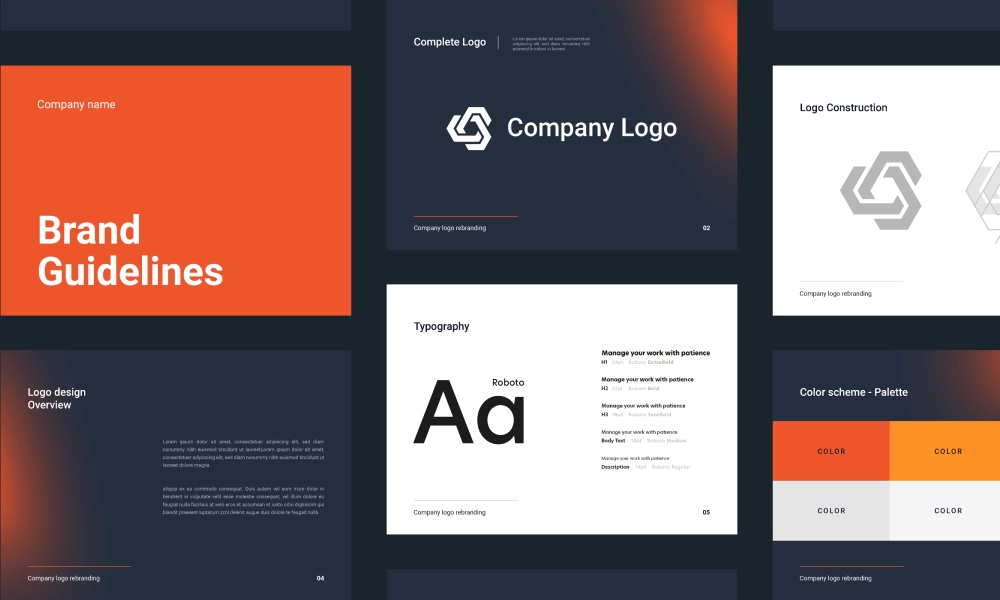
Brand guidelines sometimes called a brand style guide or brand bible are a documented set of rules that govern how your brand presents itself across every channel and every format. They capture the essence of your brand and translate it into specific, actionable instructions that anyone working with your brand can follow.
They cover three broad territories:
Visual identity: your logo, colour palette, typography, imagery style, iconography, and how all of these elements should and should not be used.
Language and communication: your brand voice, tone, key messaging, taglines, and any trademarked terminology that defines how your brand speaks.
Brand values and positioning: your mission, your purpose, your audience, and the promise your brand makes to the people it serves.
Together, these elements form a framework that allows your entire team, your agency partners, your freelancers, and anyone else who touches your brand to produce work that looks and feels cohesive- every single time.
Why Brand Guidelines Matters
Consistency in branding is not just an aesthetic concern. It has direct commercial consequences. Studies show that presenting a brand consistently across all platforms can increase revenue by up to 23%. Yet most businesses particularly growing ones underestimate how much inconsistency is silently costing them.
Here is why investing in clear, thorough brand guidelines is one of the smartest moves a Dubai business can make:

1. They Create Instant Recognition
Recognition is the gateway to trust. When your audience encounters your brand repeatedly and experiences the same visual language and tone each time, they begin to recognise you before they even consciously register it. That instinctive familiarity is enormously powerful- it is what makes customers choose you over an equally capable competitor they know less well.
Strong branding services are built on this principle. When your logo, colours, and tone work together in harmony across every platform, recognition happens faster and sticks longer.
2. They Keep Every Team Member Aligned
As your business grows, more people contribute to your brand's presence- marketers, designers, salespeople, customer service agents, external agencies. Without a shared reference point, each person defaults to their own interpretation. Brand guidelines eliminate that ambiguity. They give everyone the same rulebook, which means your brand sounds like itself whether the content was written by your in-house team or an outside partner.
3. They Accelerate Content Creation
Decisions slow down when there is no established framework. What shade of blue do we use? Can we use a different logo version here? How formal should this email sound? Brand guidelines answer these questions before they are even asked, dramatically reducing the back-and-forth that eats into production time.
4. They Build Customer Trust Over Time
Customers form opinions about your brand through accumulated experience. When every interaction from your website to your social media to your packaging- delivers a consistent experience, that consistency becomes a form of reliability. And reliability is one of the most persuasive signals of trustworthiness a brand can send.
What to Include in Your Brand Guidelines
Every brand's style guide will reflect its own personality, industry, and stage of growth. But there are core components that every effective set of brand guidelines should address.
a. Mission Statement and Core Values
Your brand guidelines should open with a clear articulation of what your business exists to do and what it believes in. This is not marketing copy- it is the philosophical foundation from which all other brand decisions flow.
Your mission statement answers the question of why your brand exists. Your values answer the question of how it behaves. Together, they provide the context that makes every other guideline meaningful. When a designer or copywriter understands what your brand stands for, they can make better creative decisions even in situations the guidelines do not explicitly cover.
b. Brand Voice and Tone
Voice is the consistent character of how your brand communicates. Tone is how that character adapts to different situations and audiences. Both need to be defined clearly.
A healthcare brand in Dubai communicates very differently from a lifestyle e-commerce brand. A B2B corporate business uses a different register from a consumer-facing travel company. Your guidelines should describe your brand's personality in concrete terms- not just "professional" or "friendly," but specific enough that two writers independently reading them would produce content that sounds like it came from the same brand.
Include real examples: phrases you would use, phrases you would never use, and how your tone shifts between a formal proposal and a social media reply.
c. Audience Personas
Brand guidelines are only useful if they keep the right audience in mind. Including detailed buyer personas ensures that everyone creating content has a clear picture of who they are speaking to.
Go beyond surface demographics. Describe your ideal customer's motivations, frustrations, aspirations, and digital habits. In Dubai's diverse, multicultural market, even small differences in how you describe your audience can lead to significantly different and more effective- creative decisions.
d. Logo Usage Rules
Your logo is your most visible brand asset, which makes it the most frequently misused one. Your guidelines need to specify every scenario in which your logo will appear: on light backgrounds, dark backgrounds, in colour, in monochrome, at small sizes, at large sizes.
Equally important is a clear "do not" section- what distortions, colour substitutions, and rearrangements are off-limits. A professionally designed logo only retains its impact when it is used correctly and consistently.
e. Colour Palette
Colour is one of the most powerful tools in brand recognition. Research suggests that colour alone can increase brand recognition by up to 80%. Your guidelines should define your primary brand colours, secondary colours, and any accent colours and provide the exact codes for each (HEX, RGB, and CMYK) so there is no variation between print and digital applications.
Include guidance on how colours can be combined, which combinations to avoid, and how your palette should appear across different mediums. Your website design colour application will differ from your printed materials, and both should be addressed.
f. Typography
Typography communicates personality before a word is read. The fonts your brand uses and how they are used- contribute significantly to whether your brand feels premium or approachable, authoritative or playful, modern or traditional.
Specify your primary typeface, secondary typeface, and how each should be applied. Define heading sizes, body copy styles, and any restrictions on font pairing. This applies equally to your digital presence from your website to email templates and to print materials.
g. Imagery Style
The photographs, illustrations, and graphics your brand uses are as much a part of your visual identity as your logo and colours. Your guidelines should describe the style of imagery that reflects your brand: the lighting, the mood, the subjects, the level of production polish.
This is particularly relevant for social media marketing and content marketing, where the volume of visual content required is high and consistency is easy to lose. A brand that uses warm, candid lifestyle photography should not suddenly switch to cold, corporate stock images because someone ran out of original content.
h. Branded Terminology
Every brand has language that is uniquely its own- product names, service names, slogans, trademarked phrases. These need to be documented precisely, including correct capitalisation, spelling, and any legal trademark requirements. This section protects your intellectual property and ensures that your brand's distinctive language appears identically wherever it is used.
Brand Guidelines in Action: What Good Looks Like
The most effective brand guidelines are those that are specific enough to provide real direction but flexible enough to allow creativity. They should not read like a legal contract- they should read like a creative brief that your team genuinely wants to follow.
Consider how this plays out in practice. When your PPC advertising team builds a Google Ads campaign, they should be able to write headlines that sound unmistakably like your brand without needing to check with a senior creative. When your email marketing team designs a new template, the colours and typography should align with your website and your social profiles without anyone needing to cross-reference multiple documents.
When brand guidelines are working well, you stop noticing them- because everything simply looks and sounds like it belongs together.
How Brand Guidelines Support Your Digital Marketing Strategy
Brand guidelines are not just an internal document. They are a strategic asset that makes every element of your digital marketing more effective.
When your SEO content, your paid social ads, your video marketing, and your creative advertising all stem from the same brand foundation, they reinforce each other. A customer who encounters your brand through a YouTube pre-roll ad and then finds you via organic search will experience continuity and continuity builds confidence.
For businesses operating across multiple UAE locations in Abu Dhabi, Sharjah, or Ras Al Khaimah- brand guidelines are especially important. Local teams and regional campaigns need to speak with a consistent voice even when they are adapting content to local context.
Performance marketing also benefits directly from strong brand guidelines. Well-branded ads earn higher engagement rates, lower cost-per-click, and better quality scores- because audiences respond more positively to creative that feels credible and familiar. Every AED you invest in paid media works harder when the creative behind it is rooted in a clear, consistent brand identity.
When Should You Create or Revisit Your Brand Guidelines?
The most obvious moment to create brand guidelines is when you are launching a new business. But there are several other triggers that should prompt a review or complete overhaul of your existing guide:
Rebranding or repositioning: If your business has shifted its market focus, updated its visual identity, or evolved its messaging, your guidelines need to catch up.
Rapid team growth: When your marketing team doubles in size or you bring on a new agency, consistent guidelines become essential for maintaining brand integrity.
Expanding into new channels: Launching on TikTok, entering a new market, or starting a podcast all raise new questions about how your brand shows up. Guidelines should address these proactively.
Noticeable inconsistency: If you look at your brand's recent output and it feels scattered or off-message, that is a clear sign your guidelines either do not exist or are not being followed.
Ready to Build a Brand That Dubai Remembers?
Brand guidelines are the invisible infrastructure behind every great brand. They are what allows a business to grow, bring on new talent, expand across platforms, and enter new markets without ever losing the identity that made people notice it in the first place.
For businesses in Dubai competing in one of the world's most dynamic commercial environments, that consistency is a genuine competitive advantage. The brands that invest in getting their identity right and document it clearly are the ones that compound their marketing results over time.
At BrandStory, we help UAE businesses develop brand guidelines that are not just documents but living, working tools. From defining your visual identity and brand voice to ensuring consistency across every digital channel, our team brings together strategy, creativity, and marketing expertise to build brands that perform.
Whether you are starting from scratch or bringing discipline to an existing brand, reach out to our team and let us help you build the foundation your business deserves.


Are You Looking for Growth?
Free instant digital marketing audit and improve performance.
Get Graded Today
Transform Your Digital Growth with BrandStory
From SEO, PPC, social media marketing, and content marketing to website development, branding, and lead generation, BrandStory delivers result-driven digital marketing services in Dubai and across the UAE, helping businesses attract, engage, and convert more customers.
Trusted by 1000+ leading brands in Dubai and globally including:




Related Blogs
.webp)
Personal Branding Specialist: Elevate Your Identity
In today's competitive professional landscape, establishing a strong personal brand is vital for both individuals and bu...
.webp)
Branding Solutions in Dubai: A Detailed Overview
In Dubai's vibrant marketplace, effective branding solutions are essential for businesses aiming to stand out. Branding ...
.webp)
The Importance of Branding in the Hospitality Industry
In the hospitality industry, effective branding is vital for setting businesses apart in a competitive market. It's not ...

Personal Branding for Real Estate Agents in The UAE
In the competitive world of real estate in the UAE, personal branding is essential for agents looking to stand out. It's...
.webp)
Digital Branding Solutions in Dubai: A Detailed Overview
In the vibrant business ecosystem of Dubai, digital branding solutions are essential for companies aiming to stand out. ...
.webp)
Audio Branding Studio in Dubai: Enhancing Brand Identity
In Dubai's vibrant business scene, audio branding is essential for creating a memorable identity. This concept goes beyo...

