
-
- Digital Marketing
-
 Perf. Marketing
 E-mail Marketing
 PPC Services
 Video Marketing
 Influencer Marketing
- Social Media
 Facebook Marketing
 Instagram Marketing
 Twitter Marketing
 Pinterest Marketing
 TikTok Marketing


-
- Digital Marketing
-
Perf. Marketing
- E-mail Marketing
- PPC Services
- Video Marketing
- Influencer Marketing
- Social Media
- Facebook Marketing
- Instagram Marketing
- Twitter Marketing
- Pinterest Marketing
- TikTok Marketing
Blog
SEO vs PPC: Which Is Right for Your Business
Want a Quick Summary?
Summarize this article instantly with ChatGPT.
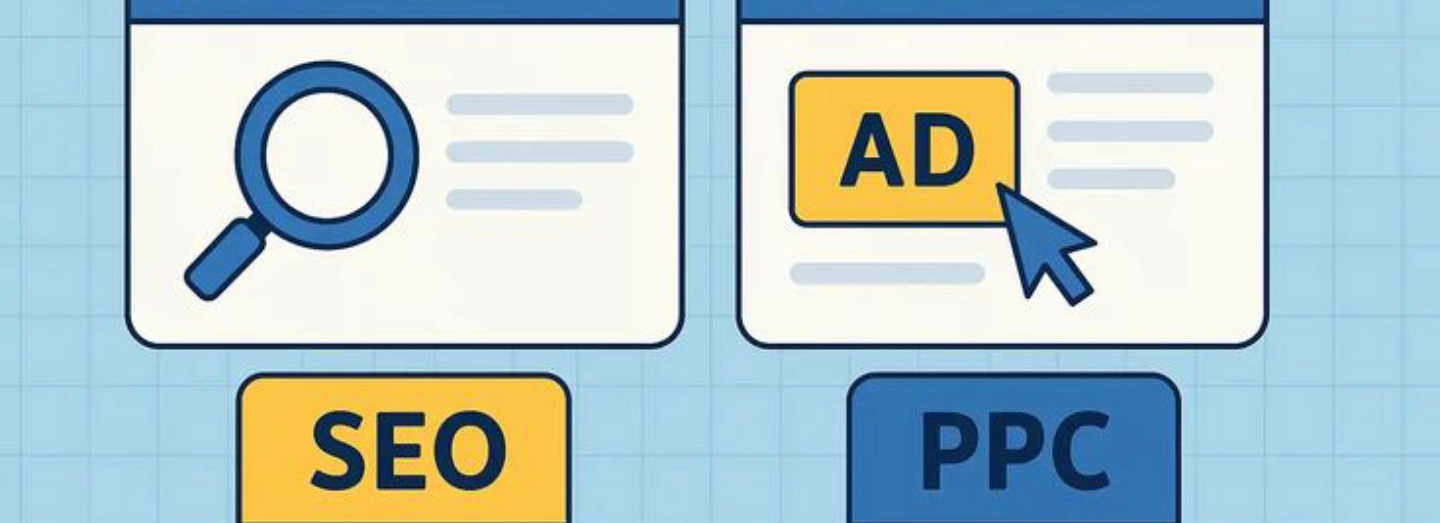
When businesses decide to invest in their digital presence through search engines, they inevitably face a fundamental strategic question: should they focus on SEO building organic visibility over time or PPC paying for immediate placement through ads? Both approaches appear in the same search results pages and both aim to bring qualified traffic to your website. But they operate on entirely different principles, timelines, and cost structures. Understanding the difference between SEO and PPC, the unique advantages each offers, and how they can be used together is essential for any business making informed marketing investment decisions.
This guide provides a thorough comparison of SEO and PPC across every meaningful dimension helping you understand which approach, or which combination, is right for your business, your goals, and your budget.
What Is SEO?
SEO (Search Engine Optimisation) is the process of optimising a website to earn higher positions in organic, unpaid search results. When Google evaluates hundreds of ranking factors the quality and relevance of content, the authority of backlinks, the technical performance of the site, and the user experience it delivers and places your pages in the results based on those factors, that is SEO at work. You do not pay Google for each visitor that arrives through organic results. Instead, you invest in your website's quality and authority to earn those positions on merit.
The primary advantage of SEO is its sustainability. Rankings earned through quality optimisation persist and continue to generate traffic long after the initial investment. The primary challenge is time meaningful results from SEO typically take three to six months to materialise, and building significant authority in competitive markets can take a year or more of consistent effort. Specialist SEO services build this organic foundation systematically, combining technical excellence, content strategy, and link authority development.
What Is PPC?
PPC (Pay-Per-Click) advertising places your website at the top of search results through a paid auction system. You bid on specific keywords and pay each time a user clicks your advertisement. On Google, these paid results appear at the very top and bottom of search results pages, clearly labelled as sponsored content. The most prominent PPC platform is Google Ads, though Microsoft Advertising (Bing Ads) also serves a significant audience.
PPC delivers immediate results campaigns can be live and generating traffic within hours. You have precise control over which keywords trigger your ads, what geographic areas see them, what time of day they run, and what budget you spend. The fundamental trade-off is ongoing cost: every click has a price, and your visibility disappears the moment your budget runs out. Expert PPC management ensures your campaigns are structured for maximum efficiency and return on every dirham or rupee spent.
SEO vs PPC: Key Differences
Cost Structure
SEO involves upfront investment in expertise, content, and technical work, with returns that grow over time without proportional cost increases. Once you rank, traffic is essentially free per visit. PPC requires ongoing spend every click costs money, and the costs can escalate significantly in competitive niches. In highly competitive markets, PPC keywords can cost hundreds of rupees or dirhams per click, making sustainable profitability dependent on robust conversion rates and customer lifetime value calculations.
Speed of Results
PPC wins decisively on speed. Campaigns go live in hours and begin generating impressions and clicks almost immediately. SEO results require patience typically three to six months before meaningful ranking improvements appear, and often longer for highly competitive keywords. For businesses with urgent traffic needs a product launch, a seasonal promotion, a new market entry PPC provides the immediacy that SEO cannot.
Longevity of Results
SEO wins decisively on longevity. Organic rankings, once established, continue to generate traffic without additional spend. A strong SEO presence built today will still be delivering value years from now assuming continued maintenance and quality improvement. PPC results are purely transactional the moment the campaign ends, the traffic stops. There is no residual value from past PPC spending. This fundamental difference in longevity is what makes SEO's long-term ROI so superior for businesses with a multi-year growth perspective.
Click-Through Rates and User Behaviour
Multiple studies consistently show that organic results receive a significantly higher share of total clicks than paid results for most query types. Users tend to trust and engage with organic results more than ads particularly for informational searches, research-oriented queries, and long-tail searches. However, PPC can actually outperform organic CTR for specific query types particularly bottom-of-funnel transactional searches where users are highly commercial in intent and the ad's immediate action prompt is compelling.
Targeting Capabilities
PPC offers exceptional targeting precision. You can target by location down to a postcode, by device type, by time of day, by audience demographics and interests, and even by remarketing to users who have previously visited your website. SEO targeting is inherently broader you attract the users who search for the terms you rank for, with less direct control over other characteristics. For businesses with very specific audience targeting needs, PPC's precision is a significant advantage.
Data and Testing
PPC provides rich, fast data on what messaging converts. A/B testing different ad headlines, descriptions, and calls to action in PPC campaigns generates statistically significant results within days or weeks. This paid search data is invaluable for informing SEO strategy the keywords and messaging that convert best in paid search campaigns point toward the highest-priority content investments for organic search. Integrating on-page SEO with insights from PPC creates a powerful feedback loop between the two channels.
When SEO Is the Better Choice
SEO is the superior choice when your business has a medium-to-long-term growth perspective and can afford the time investment before results materialise. It is ideal for businesses that want to build a durable, cost-effective organic presence that generates leads and traffic without ongoing per-click costs. It is particularly powerful for businesses with educational content opportunities informational queries that attract users in the research phase who can be nurtured toward purchase over time.
SEO is also the right priority for businesses targeting a wide range of related keywords across many pages building a comprehensive content strategy that covers a topic area in depth. The topical authority developed through comprehensive SEO content creation is a sustainable competitive advantage that PPC cannot replicate. Additionally, semantic SEO strategies that build deep topical relevance create ranking strength that compounds across entire subject areas, not just individual keyword targets.
When PPC Is the Better Choice
PPC is the right priority when you need immediate results during a launch period before SEO authority has been established, for seasonal campaigns with defined windows, for testing new products or markets quickly, or for capturing highly competitive terms where building organic rankings would take years. PPC is also particularly effective for remarketing re-engaging users who have visited your website but not converted, keeping your brand top of mind as they continue their purchase journey.
For businesses with high customer lifetime values where a single conversion can generate substantial revenue the economics of PPC can be compelling even with significant cost-per-click values. Legal services, financial products, healthcare services, B2B software, and luxury goods often see strong PPC ROI despite high click costs because the value of each converted customer is so substantial.
The Most Powerful Approach: SEO and PPC Together
The false choice between SEO and PPC obscures the most effective strategy available to most businesses using both channels together as complementary pillars of a comprehensive search marketing strategy. PPC provides immediate visibility and revenue while long-term SEO authority is being built. Once organic rankings are established for key terms, PPC budgets can be reallocated from those terms to new opportunities, reducing total paid spend while maintaining comprehensive search visibility.
The data synergies between the two channels amplify their combined effectiveness. PPC keyword performance data informs SEO content priorities. SEO keyword research identifies long-tail opportunities too expensive or low-volume for PPC. Dominating both organic and paid results for the same high-value queries a phenomenon called SERP domination dramatically increases the probability that a searching user will engage with your brand. Businesses that invest in both channels through a full-funnel performance marketing strategy create a search presence that is resilient, comprehensive, and consistently delivers results across both short and long-term horizons.
Budgeting for SEO vs PPC
Budget allocation between SEO and PPC depends on business stage, competitive environment, and growth objectives. Early-stage businesses or those entering new markets often benefit from a heavier initial PPC weighting using paid traffic to generate immediate revenue while SEO foundations are built. As organic rankings strengthen over six to twelve months, the PPC budget can be progressively rebalanced toward SEO investment as organic traffic begins to carry more of the total traffic load.
Established businesses with existing organic rankings should maintain their SEO investment consistently allowing rankings to compound while using PPC tactically for specific campaigns, product launches, and high-competition terms where organic ranking would be difficult. The goal over time is to reduce the proportion of total marketing spend going to paid channels as organic performance grows, improving the overall efficiency of the marketing investment portfolio. Working with a specialist digital marketing agency that excels in both SEO and PPC ensures your budget allocation is strategically optimised for your specific goals and market context.
Conclusion
SEO and PPC are not rivals they are complementary tools that together create a comprehensive, resilient search marketing strategy. SEO builds the durable organic foundation that delivers compounding returns over time. PPC provides the immediate, controllable visibility that generates results now. Understanding the strengths, limitations, costs, and timelines of each channel empowers businesses to make smarter investment decisions and build search marketing strategies that deliver value across both short and long-term horizons. Whether your immediate priority is SEO, PPC, or an integrated combination of both, partnering with an expert team ensures your strategy is built for maximum performance and sustainable growth.
Looking for Measurable Business Growth?
Partner with BrandStory for end-to-end digital & creative excellence.


Are You Looking for Growth?
Free instant digital marketing audit and improve performance.
Get Graded Today
Transform Your Digital Growth with BrandStory
From SEO, PPC, social media marketing, and content marketing to website development, branding, and lead generation, BrandStory delivers result-driven digital marketing services in Dubai and across the UAE, helping businesses attract, engage, and convert more customers.
Trusted by 1000+ leading brands in Dubai and globally including:




Related Blogs

How to Fix Mobile Usability Issues: Step-by-Step Technical Guide
With Google operating entirely on mobile-first indexing, search engine crawlers assess, index, and rank web pages base...

How to Fix JavaScript SEO Issues: Complete Technical Guide
Modern web development relies heavily on JavaScript frameworks like React, Next.js, Vue, Angular, and Nuxt to build ri...

How to Fix Soft 404 Errors: Complete Technical SEO Guide
A Soft 404 error occurs when a web server responds with an HTTP 200 OK status code signaling success, but search engin...

How to Set Up Hreflang Tags: Technical SEO Implementation Guide
The hreflang attribute is an HTML specification that informs search engines about the language and geographical target...

How to Fix Mixed Content Errors: Complete Security Guide
A mixed content error occurs when an initial webpage loads securely over HTTPS, but subresources such as images, scrip...

How to Fix Missing Meta Descriptions: Complete SEO Guide
A missing meta description occurs when an HTML document lacks a <meta name="description"> tag in its <head>...

