
-
- Digital Marketing
-
 Perf. Marketing
 E-mail Marketing
 PPC Services
 Video Marketing
 Influencer Marketing
- Social Media
 Facebook Marketing
 Instagram Marketing
 Twitter Marketing
 Pinterest Marketing
 TikTok Marketing


-
- Digital Marketing
-
Perf. Marketing
- E-mail Marketing
- PPC Services
- Video Marketing
- Influencer Marketing
- Social Media
- Facebook Marketing
- Instagram Marketing
- Twitter Marketing
- Pinterest Marketing
- TikTok Marketing
Blog
On-Page SEO Checklist: What Elements You Need to Optimise
.webp)
Want a Quick Summary?
Summarize this article instantly with ChatGPT.
On-page SEO is the practice of optimising individual web pages to rank higher in search engine results and earn more relevant traffic. Unlike off-page SEO, which relies on external factors like backlinks, on-page SEO is entirely within your control. Every decision you make about how a page is structured, written, and presented affects how search engines evaluate and rank it. This page is a complete, printable on-page SEO checklist you can run through before publishing any article or page in 2026.
Before you hit publish, work through the checklist below. Each item is organised in the exact order you should tackle it from keyword research and title tags through to final pre-publish verification. Use it for blog posts, landing pages, service pages, and product descriptions.
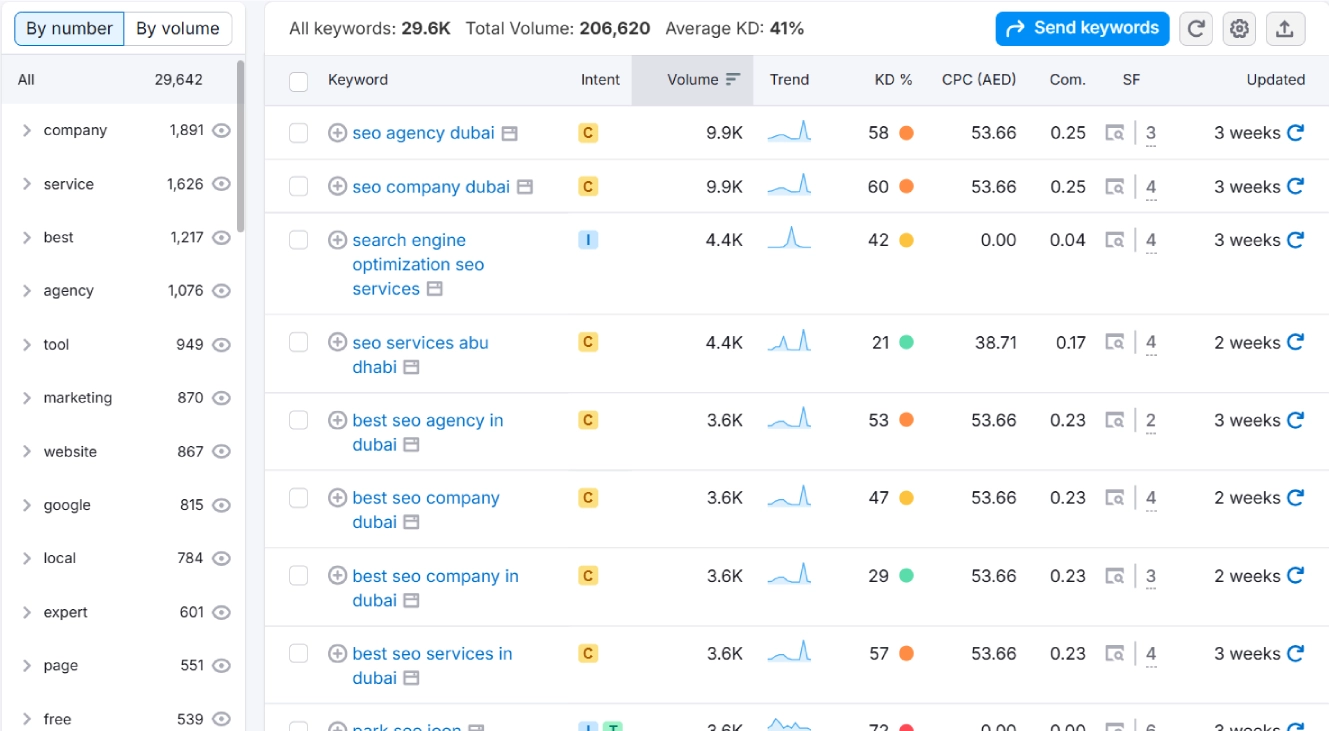
1. Keyword Research and Targeting Checklist
Before optimising any page, confirm your target keyword. Each page should have one primary keyword and a small cluster of related secondary keywords. Targeting too many unrelated keywords on a single page dilutes focus and reduces your chances of ranking.
| Check | Action |
|---|---|
| Primary keyword selected | One main term the page will rank for |
| Search volume validated | Confirmed the keyword has enough monthly searches to be worth targeting |
| Competition assessed | Realistic for your domain's current authority |
| Search intent matched | Informational, commercial, transactional, or navigational content format matches the intent |
| Semantic variations identified | 3-5 related terms and synonyms (e.g., on-page optimisation, page optimisation, on-page factors) |
| Long-tail phrases noted | Question-based and conversational phrases for voice search and AI Overviews |
2026 Update: Semantic variations matter more than exact-match repetition. Google understands context through NLP, so focus on topic coverage rather than keyword density. Include related terms, synonyms, and question-based phrases that AI Overviews frequently cite.
2. Title Tag Optimisation Checklist
The title tag is your page's headline in search results. It is one of the strongest ranking signals and the biggest factor in whether someone clicks.
| Check | Action |
|---|---|
| Primary keyword at the start | Place the main keyword in the first 1-3 words of the title |
| Length 50-60 characters | Under 60 to avoid truncation in SERPs |
| Unique across the site | No duplicate title tags on any two pages |
| Compelling and clickable | Includes a benefit, number, year, or power word (e.g., Complete, Ultimate, Proven) |
| Brand name included | At the end for homepage and key pages (optional for blog posts) |
| Accurate reflection of content | Matches the H1 and opening paragraph to reduce Google rewrites |
Example: On-Page SEO Checklist (2026): Complete Pre-Publish Guide
2026 Update: Google now rewrites 33.4% of title tags. To minimise rewrites, keep titles under 60 characters, front-load your primary keyword, and make the title accurately reflect the H1 and opening paragraph content.
3. Meta Description Checklist
The meta description does not directly influence rankings, but it significantly affects click-through rate. Treat it as a mini advertisement for your page.
| Check | Action |
|---|---|
| Primary keyword included naturally | Appears once without forcing |
| Length 150-160 characters | Avoids truncation in search results |
| Benefit-driven copy | Tells the searcher what they will gain by clicking |
| Call to action included | Learn, Discover, Download, Check prompts the click |
| Unique per page | No duplicate meta descriptions across the site |
| Accurate summary | Reflects the first 100 words of content to reduce Google rewrites |
Example: Use this complete on-page SEO checklist before publishing any page in 2026. Covers titles, meta tags, headers, content, images, links, and Core Web Vitals.
2026 Update: Google's rewrite rate for meta descriptions is now 63%. To reduce rewrites, ensure your meta description accurately summarises the first 100 words of content and includes the primary keyword naturally.
4. Header Tag Structure Checklist
Header tags organise your content and help search engines map the topics you cover. A clear hierarchy improves scannability and snippet eligibility.
| Check | Action |
|---|---|
| Exactly one H1 per page | Includes or closely relates to the primary keyword |
| H2s for major sections | Each H2 covers a distinct subtopic |
| H3s for subsections | Nested logically under H2s no skipped levels |
| No unnecessary H4+ | Avoid deep nesting unless truly needed |
| Question-based H2s included | Some headers phrased as questions for AI Overview and featured snippet capture |
| Secondary keywords in subheadings | Where they read naturally |
2026 Update for AI Overviews: Phrase some H2/H3 headers as questions (e.g., "What Is On-Page SEO?" or "How Do You Optimise a Meta Description?"). AI Overviews heavily cite pages where the subheading is itself the query the user typed, and the paragraph immediately below it directly answers that question in 2-4 sentences.
5. Content Quality and Depth Checklist
Content quality is the single biggest ranking factor. Search engines evaluate depth, accuracy, originality, readability, and intent satisfaction.
| Check | Action |
|---|---|
| Primary keyword in first 100 words | Natural placement early in the opening paragraph |
| Semantic variations woven in | Related terms appear naturally throughout (on-page optimisation, page-level SEO, ranking factors) |
| Word count 1,500+ | Benchmark for first-page ranking content in 2026 |
| Every section adds value | No filler or repetition each paragraph earns its place |
| Search intent fully satisfied | Reader does not need to search elsewhere for the same information |
| Original insights included | First-hand experience, original data, or unique perspective AI cannot replicate |
| Statistics sourced with links | Every fact backed by a credible primary source |
| Content scannable | Short paragraphs (2-4 sentences), bullet lists, and white space throughout |
| Revision date visible | Updated with current year and visible to readers |
6. E-E-A-T Signals Checklist (Critical for 2026)
Experience, Expertise, Authoritativeness, and Trustworthiness are now fundamental. Pages with strong E-E-A-T have a 30% higher chance of reaching the top 3 positions.
| Check | Action |
|---|---|
| Author bio with credentials | Name, role, relevant expertise, and link to author page with published work |
| Article schema with author markup | Structured data identifies the author entity |
| Primary sources cited | Links to original research, not intermediary summaries |
| First-hand experience shown | "We tested this" with screenshots, data, or specific results |
| Content fact-checked | All statistics and claims verified before publishing |
| Human-edited (not raw AI) | Meaningful expert review and rewriting of any AI-drafted content |
| Trust signals visible | Contact info, privacy policy, and editorial standards accessible |
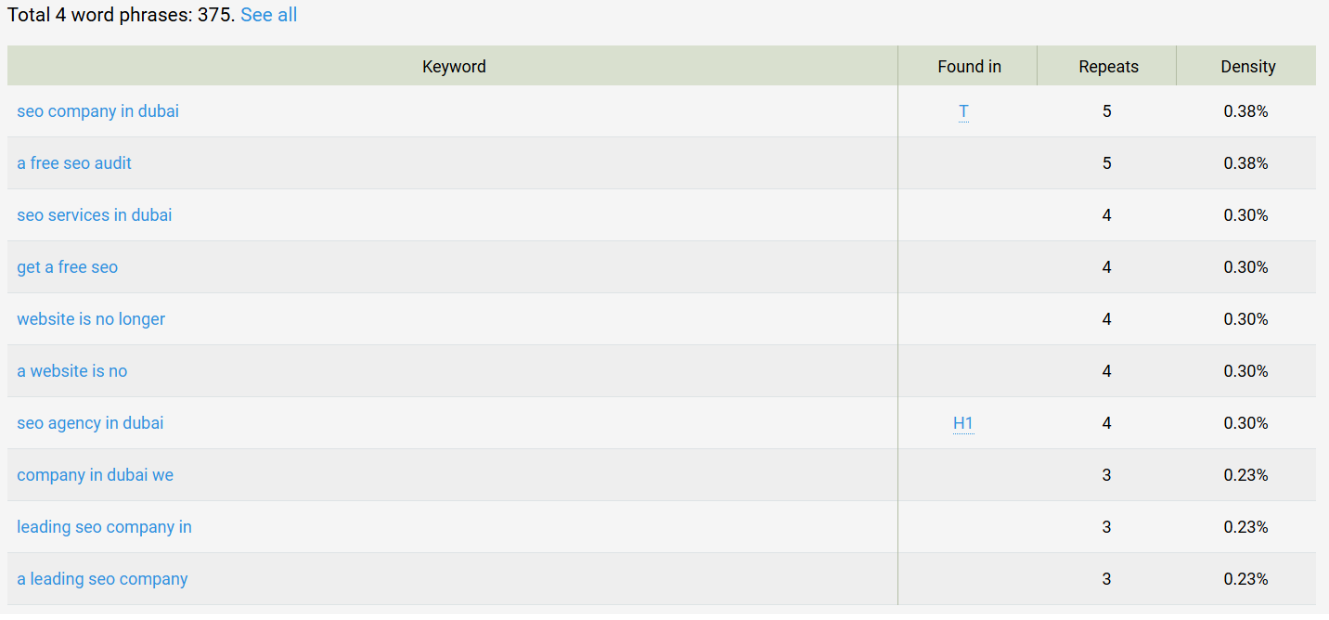
7. Keyword Placement and Density Checklist
Your primary keyword should appear in specific locations. Do not obsess over density focus on natural placement and topic coverage.
| Check | Action |
|---|---|
| Title tag | Primary keyword near the beginning |
| H1 heading | Primary keyword included |
| First 100 words | Primary keyword appears naturally |
| At least one H2 or H3 | Primary or semantic variation in a subheading |
| Image alt text | Descriptive alt text with keyword context where natural |
| URL slug | Primary keyword in the page address |
| Meta description | Primary keyword included once |
| Natural body usage | Keyword and semantic variations read naturally no stuffing |
2026 Update: Keyword density is no longer a ranking factor. Google understands context and meaning through NLP. Focus on semantic variations of your main topic terms like "on-page optimisation," "page optimisation," and "on-page factors" are synonymous with "on-page SEO" and help rank for related searches.
8. Image Optimisation Checklist
Every image must be optimised for speed, accessibility, and search visibility.
| Check | Action |
|---|---|
| Compressed and resized | Under 200KB per image; hero images prioritised |
| Modern format used | WebP or AVIF for best compression and quality |
| Descriptive file name | Hyphen-separated keywords (e.g., on-page-seo-checklist-2026.webp) |
| Alt text written | Accurate description with keyword context where natural |
| Dimensions set | Width and height attributes prevent layout shift (CLS) |
| Lazy loading enabled | For all below-the-fold images |
| Captions added where relevant | Captions reinforce keyword relevance and improve engagement |
9. Internal Linking Checklist
Strategic internal linking distributes link equity, helps crawlers discover content, and keeps users engaged longer.
| Check | Action |
|---|---|
| Relevant internal links included | 3-5 for short posts; 8-15 for long guides |
| Descriptive anchor text | Keyword-rich and specific no "click here" or "read more" |
| Links to related content | Connects to topically relevant pages on your site |
| Links from high-authority pages | Important pages receive links from your strongest content |
| Logical site architecture | Topical clusters interlinked with relevant anchor text |
2026 Update: Internal linking has been confirmed to deliver a 25% traffic uplift via A/B testing. Sites with 40+ internal links see 4x more clicks than those with sparse linking. Build topical clusters by interlinking related content with relevant anchor text.
10. URL Structure Checklist
| Check | Action |
|---|---|
| Under 75 characters | Short and descriptive |
| Primary keyword included | Near the beginning of the URL |
| Hyphens as separators | Not underscores or spaces |
| Lowercase only | No mixed case |
| No stop words | Remove a, an, the, of, for where possible |
| HTTPS protocol | Secure connection for all pages |
Example: https://yoursite.com/on-page-seo-checklist
11. Page Speed and Core Web Vitals Checklist (Updated for 2026)
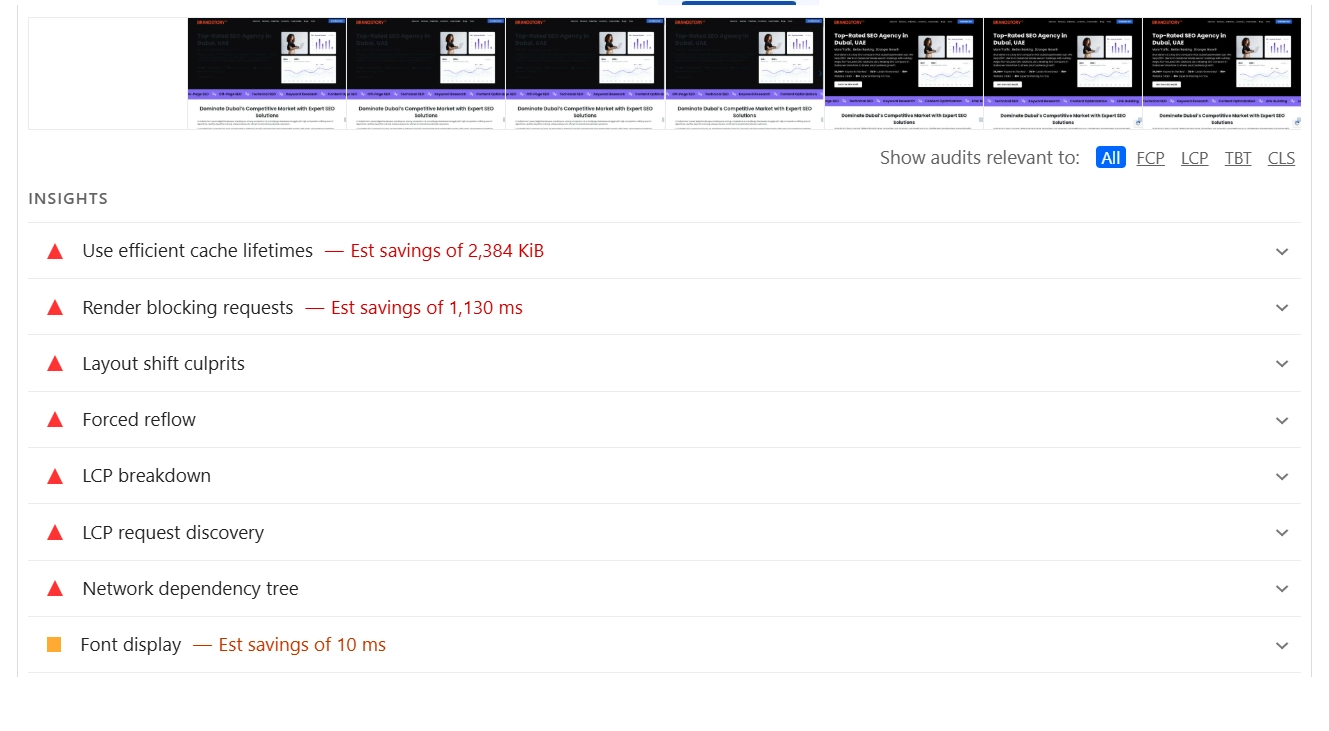
Page speed is a confirmed ranking factor. In 2026, INP (Interaction to Next Paint) replaced FID as the responsiveness metric.
| Metric | Target | Check |
|---|---|---|
| LCP (Largest Contentful Paint) | Under 2.5 seconds | Compress images, improve TTFB, remove render-blocking CSS, use CDN |
| INP (Interaction to Next Paint) | Under 200ms | Reduce heavy JavaScript, split long tasks, delay non-essential third-party scripts |
| CLS (Cumulative Layout Shift) | Under 0.1 | Set dimensions for images/videos, reserve space for ads/embeds, avoid late-loading font swaps |
Run PageSpeed Insights or Lighthouse before every major publish. Addressing these technical factors is an integral part of on-page SEO that is often overlooked by those who focus only on content.
12. Mobile Friendliness Checklist
Google uses 100% mobile-first indexing. Your page must perform flawlessly on mobile.
| Check | Action |
|---|---|
| Font size 16px minimum | Body text readable without zooming |
| Tap targets 48x48px | Buttons and links easy to tap with adequate spacing |
| No horizontal scrolling | Content fits within the viewport |
| Viewport meta tag set | Properly configured for responsive scaling |
| Responsive images | Images scale correctly on all screen sizes |
| Tested on real devices | Not just emulators actual phones and tablets |
13. Schema Markup Checklist
Structured data helps search engines understand your content and powers rich results. In 2026, schema also acts as an AI citation signal.
| Schema Type | Use On | Check |
|---|---|---|
| Article | All blog posts and guides | Helps AI Overviews identify and cite your content |
| BreadcrumbList | All pages with hierarchy | Enhances SERP navigation and crawlability |
| Organization | Homepage and About page | Builds brand authority and supports E-E-A-T |
| FAQPage | Pages with 4+ answered questions | Expands SERP real estate and AI citation potential |
| Product | E-commerce product pages | Enables rich snippets with price, availability, reviews |
| LocalBusiness | Location and service area pages | Powers local pack and Google Maps visibility |
| Review | Testimonial and review pages | Displays star ratings in SERPs |
Validate all schema with Google's Rich Results Test before publishing. Inaccurate or incomplete markup does more harm than good.
14. AI Search Optimisation (GEO) Checklist New for 2026
Generative Engine Optimisation structures your content so AI answer engines can extract and cite it. Brands cited in AI Overviews earn 35% more traffic.
| Check | Action |
|---|---|
| Answer-first structure | Direct, concise answer in the first 40-60 words after each question-based H2/H3 |
| Definition paragraphs | Clear 2-3 sentence definition of key terms early in the content |
| Bullet point summaries | Key takeaways, steps, and comparisons in scannable lists |
| Schema markup implemented | Article, FAQ, and Organisation schema on all relevant pages |
| Primary sources cited | Statistics linked to verifiable URLs with publication dates |
| E-E-A-T signals strong | Named authors, credentials, original data, expert review |
15. Readability and Formatting Checklist
| Check | Target |
|---|---|
| Flesch-Kincaid Readability | 60-70 (easy to read) |
| Passive voice percentage | Under 10% active voice preferred |
| Paragraph length | Maximum 3-4 sentences per paragraph |
| White space usage | Liberal improves comprehension by 20% |
| Data and statistics | Credible sources with links |
| Real examples or case studies | Proof that techniques work in practice |
Downloadable On-Page SEO Checklist 2026 (PDF)
Download the complete on-page SEO checklist as a printable PDF: Download On-Page SEO Checklist 2026 (PDF)
The PDF checklist includes all 15 sections above in a compact, tick-box format you can use before publishing every page. Print it, laminate it, and keep it next to your desk.
Pre-Publishing Verification: Final On-Page SEO Checklist
Before you hit publish, run through this final verification table. Every item must pass.
| # | Check | Pass / Fail |
|---|---|---|
| 1 | Primary keyword identified with validated search intent | |
| 2 | Title tag 50-60 characters with primary keyword at the start | |
| 3 | Meta description 150-160 characters with primary keyword and CTA | |
| 4 | Exactly one H1 tag including primary keyword | |
| 5 | Logical H2/H3 hierarchy with no skipped levels | |
| 6 | Some H2/H3 headers phrased as questions for AI Overview capture | |
| 7 | Primary keyword in first 100 words | |
| 8 | Content 1,500+ words with comprehensive topic coverage | |
| 9 | Original insights, data, or first-hand experience included | |
| 10 | Author bio with credentials and linked author page | |
| 11 | All facts verified with linked primary sources | |
| 12 | Content updated with visible revision date | |
| 13 | Images compressed, in WebP/AVIF, with descriptive alt text and set dimensions | |
| 14 | Internal links to and from related pages with descriptive anchor text | |
| 15 | Clean URL under 75 characters with primary keyword | |
| 16 | LCP under 2.5s, INP under 200ms, CLS under 0.1 | |
| 17 | Mobile-friendly: readable text, proper tap targets, no horizontal scroll | |
| 18 | Schema markup implemented and validated with Rich Results Test | |
| 19 | Answer-first paragraphs for key questions (GEO optimisation) | |
| 20 | Flesch-Kincaid readability 60-70, passive voice under 10% |
On-Page SEO Mistakes to Avoid in 2026
| Mistake | Why It Hurts | The Fix |
|---|---|---|
| AI-generated content without human review | Google's 2026 algorithms detect unedited AI output and demote it; E-E-A-T requires human expertise | Use AI for drafting, then have an expert rewrite with personal insights and fact-checking |
| Ignoring search intent | AI Overviews and Google rank pages that match intent precisely; mismatched content never ranks | Analyse top 10 results before writing; match content format to dominant intent |
| Neglecting Core Web Vitals | INP is now the responsiveness metric; poor performance directly suppresses rankings | Run PageSpeed Insights monthly; fix LCP, INP, and CLS issues systematically |
| Missing E-E-A-T signals | Pages without author bios, credentials, or original data are outranked by competitors who have them | Add author bios, cite primary sources, include original research, update content regularly |
| Keyword stuffing | Google's NLP understands context; forced repetition is a quality violation | Focus on topic coverage and semantic variations; write for humans first |
| Thin or duplicate content | Google's helpful content system actively penalises pages with little substantive information | Ensure every page has unique value; consolidate thin pages into comprehensive guides |
| No schema markup | Without structured data, your content is ineligible for rich snippets and AI Overview citations | Implement Article, FAQ, and Organisation schema on all relevant pages |
Conclusion: Use This On-Page SEO Checklist Before Every Publish
On-page SEO is a multi-layered discipline that requires attention to detail across dozens of elements. In 2026, the stakes are higher than ever: AI Overviews, E-E-A-T enforcement, Core Web Vitals updates, and helpful content systems mean that surface-level optimisation is no longer enough.
This on-page SEO checklist gives you a repeatable process to follow before publishing any page. Work through each section in order keyword research, title tags, meta descriptions, headers, content, images, internal links, URLs, speed, mobile, schema, GEO, and readability then run the final 20-point verification table.
The pages that rank are not the ones with the most content. They are the ones that demonstrate genuine expertise, load fast, read well, and are structured for both human readers and AI extraction systems. Use the downloadable PDF, the pre-publishing verification table, and the mistake-avoidance guide above to implement a professional-grade on-page SEO process today.
Download the complete checklist as a PDF and keep it next to your desk. Run through it before every publish. The businesses that win in 2026 are the ones that optimise every page the right way systematically, consistently, and with this on-page SEO checklist as their guide.
Looking for Measurable Business Growth?
Partner with BrandStory for end-to-end digital & creative excellence.


Are You Looking for Growth?
Free instant digital marketing audit and improve performance.
Get Graded Today
Transform Your Digital Growth with BrandStory
From SEO, PPC, social media marketing, and content marketing to website development, branding, and lead generation, BrandStory delivers result-driven digital marketing services in Dubai and across the UAE, helping businesses attract, engage, and convert more customers.
Trusted by 1000+ leading brands in Dubai and globally including:




Related Blogs

How to Fix Mobile Usability Issues: Step-by-Step Technical Guide
With Google operating entirely on mobile-first indexing, search engine crawlers assess, index, and rank web pages base...
How to Fix JavaScript SEO Issues: Complete Technical Guide
Modern web development relies heavily on JavaScript frameworks like React, Next.js, Vue, Angular, and Nuxt to build ri...

How to Fix Soft 404 Errors: Complete Technical SEO Guide
A Soft 404 error occurs when a web server responds with an HTTP 200 OK status code signaling success, but search engin...
How to Set Up Hreflang Tags: Technical SEO Implementation Guide
The hreflang attribute is an HTML specification that informs search engines about the language and geographical target...

How to Fix Mixed Content Errors: Complete Security Guide
A mixed content error occurs when an initial webpage loads securely over HTTPS, but subresources such as images, scrip...

How to Fix Missing Meta Descriptions: Complete SEO Guide
A missing meta description occurs when an HTML document lacks a <meta name="description"> tag in its <head>...

