When someone searches Google for a service you offer, two websites can rank in identical positions and yet look completely different in the results. One listing shows nothing but a title, a URL, and a brief description. The other shows star ratings, a price range, opening hours, a FAQ dropdown, and a rich visual presentation that immediately builds trust and invites a click. The difference between them is not content quality, backlinks, or domain age. It is schema markup the structured data layer that tells search engines precisely what your content means, not just what it says.
For Dubai businesses operating in a competitive digital environment where the difference between appearing prominently and being overlooked can be worth thousands of dirhams a month, understanding schema markup has moved from optional to essential. This guide explains what schema markup is, how it works, why it matters more in 2026 than it ever has before, and which types your website should have in place.
What Is Schema Markup?
Schema markup is structured data code added to your website that communicates explicit, machine-readable information to search engines about the content on each page. It is a shared vocabulary maintained at schema.org and supported by Google, Bing, Yahoo, and Yandex that allows website owners to label their content with precise meaning rather than leaving search engines to interpret it through inference.
Without schema markup, a search engine reading your website must work out the meaning of your content from context alone. It reads your text, analyses your HTML structure, and makes educated inferences about what your page is about. Most of the time it gets the broad strokes right. But it cannot reliably determine, without being told explicitly, that a number on your page is a price and not a phone number, that a name is an author and not a product, or that a set of sentences is a frequently asked question and not a paragraph in a blog post.
Schema markup removes that inferential uncertainty. It wraps your content in explicit labels telling Google "this is a product, this is its price, this is its rating, this is who made it, and these are reviews from real customers." Google can then present that information more accurately and more richly in search results, in AI-generated answers, and across every surface where it surfaces your content.
The most common format for implementing schema markup is JSON-LD JavaScript Object Notation for Linked Data which Google officially recommends. JSON-LD schema is placed in the head or body of a web page in a script tag, keeping it cleanly separated from the visible page content and making it straightforward to implement, update, and validate without touching the underlying HTML structure.
How Schema Markup Affects What Users See in Search Results
The most immediately visible benefit of schema markup is the transformation of ordinary search listings into rich results. Rich results are enhanced search listing formats that display additional structured information star ratings, review counts, pricing, FAQ dropdowns, event details, product availability, recipe ingredients, How-To steps, and more directly within the Google search results page.
Rich results occupy significantly more screen space than standard listings. They contain more information that helps users make faster, more confident decisions about whether to click. And they carry an implicit quality signal a listing with five stars, 47 reviews, and a price range communicates credibility at a glance that no ordinary meta description can match. Research consistently shows that websites with properly implemented schema markup generating rich results achieve click-through rates twenty to forty percent higher than equivalent listings without structured data. In high-competition sectors like professional services, real estate, healthcare, and hospitality in Dubai, that CTR advantage translates directly into more qualified traffic and more leads.
Why Schema Markup Matters Even More in the Age of AI Search
The strategic importance of schema markup has increased dramatically with the rise of AI-powered search. Google's AI Overviews, Microsoft Bing Copilot, ChatGPT's web search, and Perplexity all rely on structured data to interpret, organise, and present information from across the web. In 2025, both Google and Microsoft publicly confirmed that schema markup helps their AI systems understand content and that structured data provides an advantage in AI-driven search results.
What this means practically is that schema markup has shifted from being a tool for enhancing traditional blue-link results into being part of the core infrastructure that determines whether your content is understood, trusted, and cited by AI systems. A page with clear schema markup is easier for Google's AI to parse accurately. When AI Overviews synthesise answers from multiple sources, structured content that is clearly labelled and contextually unambiguous is more likely to be selected as a citation than equivalent content that forces the AI to rely entirely on inference.
For Dubai businesses building their SEO strategy around AI-driven search which in 2026 represents the direction search is unmistakably moving schema markup is not a peripheral tactic. It is part of the foundational content architecture that makes your website legible to the systems that now govern how information is discovered, surfaced, and presented to users.
The Most Important Schema Types for Dubai Businesses
Schema.org lists hundreds of schema types, but for most businesses the highest-impact implementations fall within a manageable set of categories. Understanding which schema types apply to your business and pages is the starting point for building an effective structured data strategy.
Organisation Schema
Organisation schema establishes your business as a verified entity in Google's understanding. It communicates your business name, logo, website URL, social media profiles, contact information, and founding details in a structured format that Google can use to populate your Knowledge Panel the information box that appears when someone searches your brand name. For Dubai businesses competing in sectors where brand trust matters, a well-populated Knowledge Panel built on Organisation schema is one of the most effective credibility signals available. It signals to both Google and users that your business is a legitimate, established entity with a clear identity.
Local Business Schema
For any business serving customers in a specific geographic location in Dubai, Local Business schema is critical. It communicates your business name, address formatted to UAE standards, phone number, opening hours including Friday prayer times and UAE public holiday schedules, your primary business category, and your service area. This structured data reinforces the local signals that influence your Google Maps ranking and local pack visibility. It eliminates the ambiguity that often suppresses local search performance telling Google's systems precisely where you are, what you do, and when you are available, rather than leaving those elements to be inferred from your website's general content.
Local Business schema works in direct coordination with your Google Business Profile. When the structured data on your website matches the information in your profile, Google receives consistent, cross-validated signals about your business identity which builds the confidence that translates into stronger local search visibility. Businesses investing in local SEO in Dubai should treat Local Business schema as a foundational implementation, not an optional extra.
FAQ Schema
FAQ schema marks up question-and-answer content in a machine-readable format, making it eligible for FAQ-style rich results expandable dropdown displays beneath your search listing that show individual questions and answers directly on the results page. These FAQ rich results dramatically increase the visual real estate your listing occupies and provide users with immediate answers to common questions before they even visit your site.
Beyond rich results, FAQ schema is one of the most effective schema types for AI Overview eligibility. Google's AI systems are designed to extract clear, direct answers to user questions. FAQ-marked content provides exactly that structured question-and-answer pairs that AI can cite with confidence. For Dubai businesses producing educational, informational, or service-explanation content, implementing FAQ schema on relevant pages is one of the highest-leverage structured data investments available.
Article and Blog Posting Schema
Article schema marks up editorial content blog posts, guides, news articles, thought leadership pieces with structured metadata including the author name, publication date, last modified date, headline, and featured image. This structured data helps Google understand that your content is authoritative, attributable editorial material rather than generic page content, and increases eligibility for enhanced article display features including author attribution, date stamps, and article rich results.
Author attribution through Article schema is particularly relevant in the context of Google's E-E-A-T framework, which emphasises Experience, Expertise, Authoritativeness, and Trustworthiness as content quality signals. Content explicitly attributed to named, credentialled authors through Article schema is better positioned to demonstrate the human expertise that Google's quality systems reward, especially in professional services industries in Dubai where demonstrating subject matter expertise is commercially essential. A specialist SEO content agency in Dubai will typically implement Article schema as standard across all editorial content to ensure authorship and content type are clearly communicated to search systems.
Product and Service Schema
For Dubai e-commerce businesses and service providers, Product and Service schema enable the display of pricing, availability, SKU information, and aggregate rating data directly within search results. Product rich results showing price, stock availability, and star ratings within the listing have a well-documented impact on click-through rates, particularly for high-intent commercial queries where users are evaluating options before making a purchase decision.
Service schema, which applies to professional service offerings rather than physical products, allows businesses to communicate the specific services they provide, their service areas, and associated reviews in a structured format that Google can use to match service listings to intent-specific local search queries. For Dubai professional service firms, this schema type creates a direct connection between structured service descriptions and the high-intent local queries that drive the most valuable enquiries.
Review and Aggregate Rating Schema
Review schema marks up individual customer reviews, while Aggregate Rating schema communicates the combined rating score across all reviews for a product, service, or business. When implemented correctly, these schema types can generate the star rating displays within search listings that immediately communicate social proof to anyone viewing the result. For Dubai businesses in competitive consumer-facing sectors clinics, restaurants, retailers, professional services star ratings in search results are one of the highest-visibility trust signals available, often making the difference between a click and a pass in favour of a competitor whose listing shows a rating and yours does not.
HowTo Schema
HowTo schema marks up step-by-step instructional content, making it eligible for How-To rich results that display the individual steps of a process directly within Google's search results. For businesses producing educational content guides on how to register a company in Dubai, how to apply for a UAE trade licence, how to prepare for a financial audit HowTo schema gives that content the best chance of generating a rich result that captures user attention and builds authority before they even click through to the website.
Schema Markup and Technical SEO: How They Work Together
Schema markup does not operate independently of the rest of your technical SEO foundation. It amplifies what is already there. A website with clean technical architecture, fast load speeds, correct indexing configuration, and strong on-page optimisation will see much greater benefit from schema implementation than a technically compromised website. Schema markup tells Google what your content means but Google needs to be able to crawl and index that content effectively before the schema can add any value.
This is why schema markup is most appropriately treated as part of a comprehensive technical SEO strategy in Dubai rather than a standalone task. Implementing schema on a website with significant crawl issues, slow Core Web Vitals, or poor mobile performance will produce limited results. The correct sequence is to address foundational technical issues first, then layer structured data on top of a properly functioning technical base where it can deliver its full benefit.
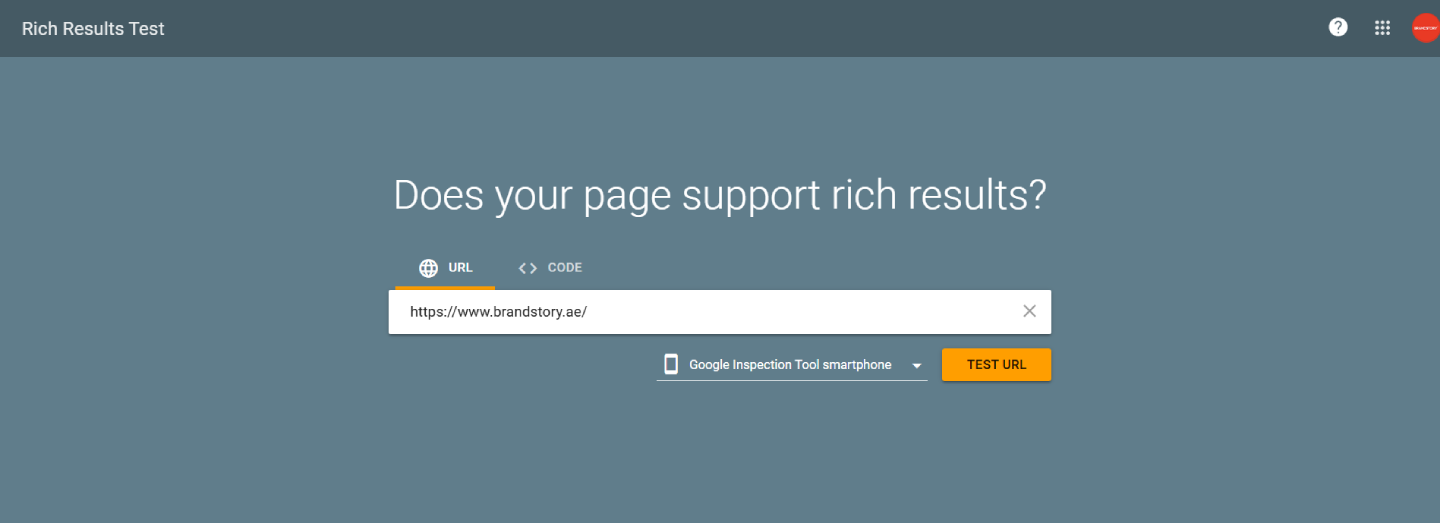
Validation is also essential. Schema markup that contains errors mismatched property values, missing required fields, or incorrect schema types for the content being marked up will either fail to generate rich results or be ignored entirely. Google's Rich Results Test and Search Console's rich result reports allow you to verify that your schema is being read correctly and identify any errors requiring correction.
What Happens When Websites Ignore Schema Markup
The most direct consequence of not implementing schema markup is losing the rich result positions your competitors are occupying. If your competitor's listing shows star ratings and yours shows a plain meta description, the click-through rate gap compounds every day. In Dubai's competitive service sectors where organic clicks are valuable and paid alternatives are expensive that compounding disadvantage is a measurable, ongoing commercial cost.
Beyond rich results, websites without schema markup are less comprehensible to AI search systems. As Google AI Overviews, Bing Copilot, and AI-powered answer engines become an increasingly dominant part of the search experience, websites that provide clear structured signals about their content will be progressively preferred as citation sources over those that do not. The businesses that implement comprehensive schema markup now are building the structural legibility that will determine AI search visibility in the years ahead.
Schema markup is also a competitive intelligence gap. Most UAE business websites have schema either absent or implemented incorrectly. An technical SEO audit in Dubai will almost always reveal significant schema markup opportunities that competitors have not yet addressed giving businesses that move quickly a structural advantage that is straightforward to build but takes time to close once a competitor has established it.
Getting Schema Markup Right: What It Actually Takes
Effective schema implementation is not a one-time task. It requires initial implementation across all relevant page types, ongoing validation to catch errors, regular updates as business information changes new hours, new services, new locations, new pricing and strategic expansion into new schema types as your content library grows and your SEO objectives evolve.
For most Dubai businesses, the highest-priority schema implementations to address immediately are Organisation schema, Local Business schema, FAQ schema on high-traffic informational pages, and Article schema across editorial content. These four types alone will meaningfully improve your eligibility for rich results, strengthen your local search signals, and increase your content's legibility to AI search systems. From this foundation, Product, Service, Review, and HowTo schema can be layered in progressively as content and technical capacity allow.
The businesses in Dubai that treat schema markup as ongoing technical infrastructure not a one-time implementation they can forget about will consistently outperform those who see it as a box to be checked. In the AI-driven search landscape of 2025 and beyond, the ability to communicate precisely and unambiguously to search systems about who you are, what you do, and what your content means is not just a ranking advantage. It is the foundation of digital visibility itself.
Related Blogs

What to Expect When You Hire an SEO Company in Dubai
Hiring an SEO company is one of the most important digital decisions a business can make in Dubai. The city is home to thousands of brands competing f...

How Long Does SEO Take in Dubai? Real Timeline Explained
If you have ever invested in SEO and wondered why the results are not showing up overnight, you are not alone. This is one of the most common question...

Why Your Dubai Business Is Not Showing on Google Maps
You search for your own business on Google Maps and it is either nowhere to be found, buried so far down the results that no customer would ever scrol...

How to Rank in Google AI Overviews: A Detailed Guide
Google AI Overviews have fundamentally changed what it means to rank in search. Where traditional SEO pointed users toward a list of links and let the...

Zero-Click Searches: What Dubai Businesses Need to Know
Something significant is happening to search and most Dubai businesses have not yet adjusted their strategy to account for it. For years, the goal of ...

The Future of SEO in Dubai: Trends You Can't Ignore
Dubai's digital landscape does not stand still. In a city where entire industries are being redefined by technology, where over 99% of the population ...