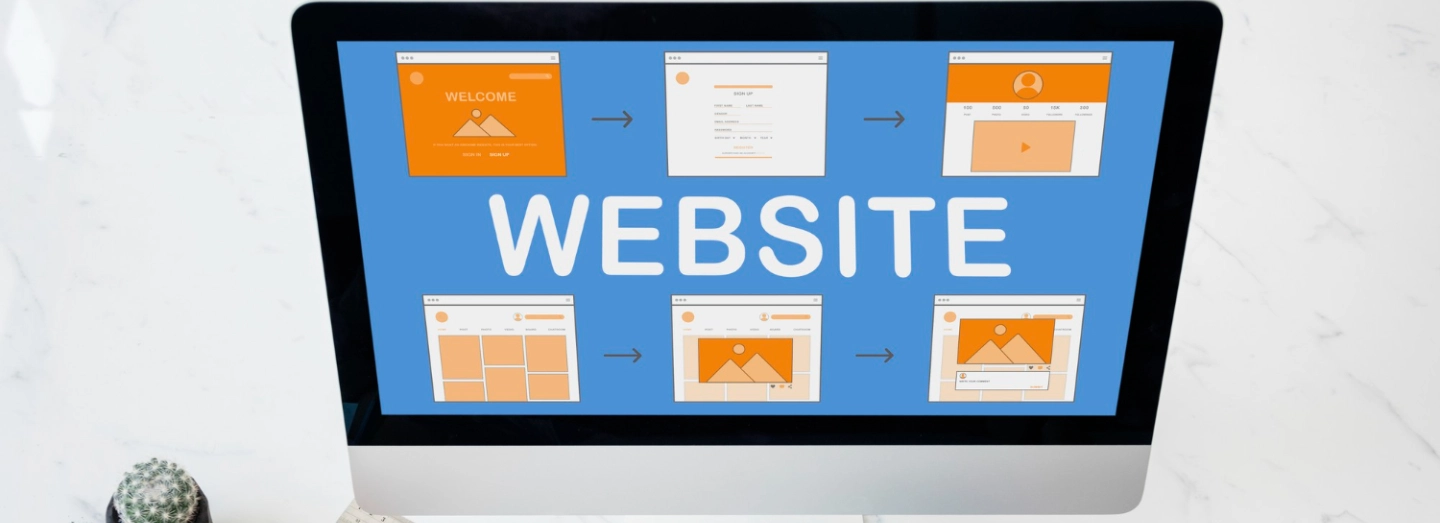
Most B2B websites in Dubai look professional. Clean design, polished photography, a services page, a contact form. On the surface, they appear to be doing the job. But look at the analytics and a different picture emerges visitors arrive, spend a few minutes browsing, and leave without making contact. The website is getting traffic but generating almost no pipeline.
This is one of the most common and costly problems in B2B marketing across the UAE. Companies invest significantly in driving traffic through SEO, paid ads, LinkedIn campaigns, and events and then lose most of that investment at the final step because the website is not built to convert corporate visitors into enquiries.
The problem is rarely design. It is structure, content, and intent alignment. A corporate buyer visiting your website for the first time is not browsing for inspiration. They are evaluating whether you are worth a conversation. They have specific questions they need answered, specific proof points they are looking for, and a limited amount of time and patience. If your website does not meet those needs within the first few minutes, they leave and most of them never come back.
Here is what a B2B website genuinely needs to convert corporate visitors in the UAE market.
A Value Proposition That Is Immediately Clear
The first question every visitor asks when they land on your website is: what does this company actually do, and is it relevant to me? You have a matter of seconds to answer that question clearly before they lose interest and move on.
Most B2B websites in Dubai fail this test. Their homepage headlines are vague "Transforming Businesses Through Innovation" or "Your Partner in Growth" and their subheadings are not much more specific. A corporate buyer cannot tell from these statements whether the company does what they need, serves companies like theirs, or operates at the scale they require.
Your value proposition needs to communicate three things immediately: what you do, who you do it for, and what outcome you deliver. "We help mid-sized manufacturing companies in the UAE reduce procurement costs through strategic supply chain consulting" is a value proposition. "Empowering businesses to reach their full potential" is not.
This clarity needs to be present on your homepage above the fold before any scrolling and reinforced on every service page and landing page across the site. Every page a corporate visitor lands on should answer the relevance question within seconds, regardless of which page they enter through.
Service Pages Built Around Buyer Intent, Not Internal Structure
Many B2B websites organise their service pages around how the company thinks about its own offerings rather than how buyers search for and evaluate solutions. The result is service pages that make sense to the people who built them but confuse or fail to engage the corporate buyers who visit them.
A service page that converts corporate visitors needs to be structured around the buyer's perspective. Start with the problem the buyer is experiencing not with a description of your service. Describe the consequences of that problem for their business. Then introduce your solution as the answer, explaining specifically how it works and what makes your approach different from alternatives. Follow with evidence case studies, results, client names where possible. Close with a clear and low-friction call to action.
This structure works because it mirrors the mental journey a corporate buyer is already on. They came to your site because they have a problem. Speaking to that problem immediately signals that you understand their world, which is the foundation of B2B credibility.
Each service should have its own dedicated page optimised for the specific search terms buyers use when looking for that service. A single consolidated "Services" page that lists everything you offer is one of the most common conversion killers on B2B websites it dilutes focus, weakens SEO performance, and forces buyers to work harder to find the specific solution they need. Working with a specialist B2B web design and development agency in Dubai that understands conversion architecture can help you restructure your service pages around buyer intent rather than internal convenience.
Social Proof That Is Specific and Credible
Corporate buyers in the UAE are sophisticated evaluators. Generic testimonials "Great company to work with, highly recommend" carry almost no weight with a senior decision-maker who is about to commit a significant budget to a new vendor. What they are looking for is specific, verifiable evidence that you have delivered results for companies like theirs.
Effective social proof on a B2B website takes several forms. Client logos from recognisable companies in your target industries signal that established organisations trust you. Case studies that describe a specific challenge, the solution you implemented, and the measurable outcome you delivered are among the most powerful conversion tools on any B2B website. Video testimonials from named clients with identifiable job titles carry more credibility than anonymous written quotes. Industry awards, certifications, and media mentions add institutional validation.
Critically, social proof should be positioned strategically throughout the site not just on a dedicated testimonials page that most visitors never reach. Place relevant client logos and case study snippets on service pages, directly adjacent to the service description they validate. Put a compelling testimonial on your homepage above the fold. Include a relevant case study link on every conversion-focused landing page. The goal is to make credibility inescapable present at every point where a buyer might be forming a judgment about whether to trust you.
In the UAE specifically, local credibility matters. A buyer in Dubai wants to see that you have worked with companies operating in this market, understand the local regulatory environment, and have a track record in the Gulf region. International credentials are valuable but should be complemented with locally relevant proof points wherever possible.
Multiple Conversion Pathways for Different Buyer Stages
One of the most limiting assumptions in B2B website design is that every visitor is ready to make contact immediately. In reality, corporate buyers visit websites at every stage of their decision journey some are in early research mode, some are actively evaluating vendors, and some are ready to shortlist and request a proposal. A website with only one conversion pathway a "Contact Us" form serves only the last group and ignores everyone else.
An effective B2B website offers conversion pathways calibrated to different levels of buyer readiness. For early-stage visitors, a downloadable resource an industry guide, a framework, a checklist exchanges value for contact details without requiring a commitment to a sales conversation. For mid-stage evaluators, a webinar registration, a free audit offer, or a case study download captures intent and opens a nurture sequence. For ready-to-buy visitors, a direct enquiry form, a meeting booking tool, or a WhatsApp contact option provides an immediate path to conversation.
Each of these pathways feeds into your CRM and nurture system, ensuring that no visitor leaves the site entirely invisible. Even if they are not ready to buy today, capturing their details and understanding their interest allows you to stay relevant during the remainder of their buying journey.
Connecting these pathways to a robust B2B lead generation system means that every conversion event whether a form submission, a resource download, or a meeting booking is tracked, attributed, and followed up with the right response at the right speed.
User Experience That Respects Corporate Buyer's Time
Corporate decision-makers are time-poor. A CFO or operations director visiting your website is not going to spend twenty minutes navigating a complex site structure to find the information they need. If the answer to their question is not accessible within two or three clicks, they will find a competitor whose website makes it easier.
This means navigation must be intuitive and organised around the buyer's perspective by industry, by business challenge, or by service type, depending on how your buyers think about their needs. Search functionality matters for larger sites. Page load speed matters on every device, particularly mobile, where a growing proportion of initial B2B research now happens even in a corporate context.
The UI and UX of a B2B website need to convey professionalism and competence without sacrificing usability. Overly complex or design-heavy interfaces that prioritise visual impact over clarity consistently underperform simpler, more functional designs in B2B conversion testing. Every design decision should be evaluated against a single question: does this make it easier or harder for a corporate buyer to find what they need and take the next step? A dedicated B2B UI/UX design approach that is grounded in how corporate users actually navigate and evaluate websites will consistently outperform design that is built primarily for visual awards.
Content That Answers the Questions Buyers Ask
Corporate buyers arrive at your website with questions. What does this service actually involve? How long does implementation take? What does it cost, at least approximately? Who else in my industry have you worked with? What makes you different from the three other companies I am evaluating?
Most B2B websites answer none of these questions directly. They describe services in broad terms, avoid any pricing signals, keep case studies vague, and offer competitive differentiation statements that are indistinguishable from those on every competitor's website.
Websites that convert corporate visitors are those that answer buyer questions proactively and specifically. FAQ sections on service pages that address common objections. Process overviews that show what working with you actually looks like. Pricing pages that at least establish a framework or starting point, even if exact costs require a conversation. Clear articulation of what makes your approach different, supported by specific evidence rather than generic claims.
This level of content transparency requires confidence and a willingness to be specific. Many B2B companies resist it because they worry about revealing too much to competitors or discouraging buyers with pricing information. In practice, the opposite is true buyers who find detailed, honest information on your website arrive at the first sales conversation significantly better qualified, more trusting, and more likely to convert than buyers who had to chase down basic information before they could even decide whether to get in touch.
Technical Performance That Does Not Undermine Your Credibility
A slow website, broken links, forms that do not work on mobile, or pages that load inconsistently across browsers are not minor technical issues they are credibility problems. A corporate buyer evaluating whether to trust you with a significant contract will draw conclusions about your operational competence from the quality of your digital presence. A website that performs poorly signals, consciously or not, that attention to detail may not be a strength.
Core Web Vitals Google's technical performance metrics covering load speed, interactivity, and visual stability are the baseline. Your website should load in under three seconds on a standard mobile connection, forms should work flawlessly across all devices, and there should be no broken links or error pages anywhere in the site. These are not advanced optimisations. They are the minimum standard for a professional B2B digital presence in 2024.
Regular technical audits, combined with a structured B2B conversion rate optimisation programme that tests and refines the elements that most directly influence enquiry rates, will progressively improve your website's commercial performance over time. Small improvements in conversion rate moving from one enquiry per hundred visitors to two can double your lead volume without any increase in traffic or marketing spend.
The Bottom Line
A B2B website that converts corporate visitors in the UAE is not necessarily the most visually impressive one. It is the one that answers the right questions at the right moment, builds credibility efficiently, offers multiple pathways for buyers at different stages, and removes every unnecessary obstacle between interest and enquiry.
In a market as competitive as Dubai, where corporate buyers have no shortage of vendor options and limited patience for websites that make them work hard to evaluate a potential partner, the quality of your digital presence is a direct reflection of the quality of your business. Get it right, and your website becomes your most productive business development asset. Get it wrong, and it becomes an expensive brochure that nobody reads twice.
Related Blogs

B2B Content Marketing in the UAE: What Types of Content Generate Leads
Content marketing has become one of those terms that means everything and nothing simultaneously. Every B2B company in Dubai has a content strategy of...
.webp)
How to Build a B2B Brand in Dubai That Corporate Buyers Actually Trust
Trust is the currency of B2B commerce. In consumer markets, a buyer might take a chance on an unfamiliar brand because the price is right or the packa...

How to Run a B2B Digital Marketing Audit Before Spending Another Dirham
There is a pattern that repeats itself with uncomfortable regularity among B2B companies in Dubai. Marketing budgets get approved. Campaigns go live. ...
.webp)
CRM + Marketing Automation: The Growth Stack Every Dubai B2B Business Needs
There is a particular kind of frustration that is almost universal among B2B sales and marketing teams in Dubai. Leads come in from various channels a...
SEO for B2B Companies in Dubai: Why It's Different from B2C
Search engine optimisation gets discussed as though it is a single discipline with universal rules. Optimise your pages, build your backlinks, publish...

How Dubai B2B Brands Use WhatsApp to Nurture Corporate Clients
WhatsApp is not a marketing channel in most global B2B playbooks. In Dubai, it is often the most important one. If you have done any amount of busines...